

Skip Hire Guide
What Size Skip Do I Need for a Loft Conversion?
Last updated: June 2026
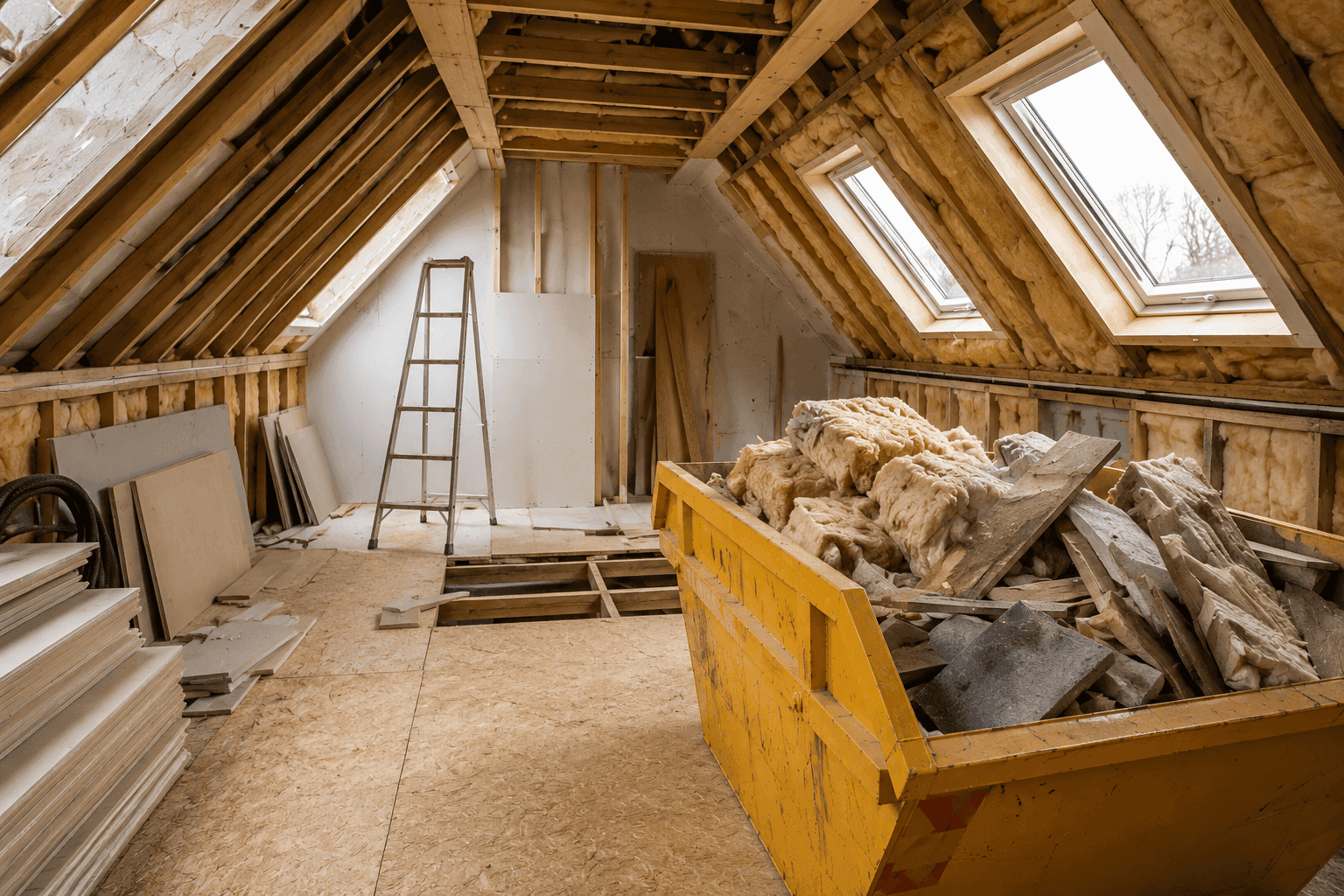
A loft conversion generates more waste than most homeowners expect. Old insulation, timber joists, plasterboard, roof felt, broken tiles and packaging from new materials all add up quickly. For most standard loft conversions, a 6 yard skip is the recommended choice. Larger projects involving significant structural work or dormer extensions may need an 8 yard skip.
Recommended
6
Yard Skip
40-60 bin bags
Quick Answer
For a standard loft conversion, hire a 6 yard skip (holds 55–65 bin bags). Smaller clearance-only loft jobs can use a 4 yard skip. Dormer or full structural loft conversions should consider an 8 yard skip.
easySkip arranges loft conversion skip hire in London, Manchester, Birmingham, Leeds, Glasgow and 1,000+ UK postcodes — same reliable service, same transparent pricing.
What Types of Waste Does a Loft Conversion Generate?
A loft conversion generates a concentrated mix of construction and roofing waste. Understanding what you'll be clearing out helps you choose the right skip size and avoid a costly swap-out mid-project.
Roof Tiles & Slates
Old clay, concrete or slate roof tiles are among the heaviest items in a loft conversion strip-out. Place these at the bottom of the skip first and declare large volumes at booking as weight limits apply.
Timber & Structural Waste
Old roof joists, rafters, purlins and studwork timber make up a significant portion of loft conversion waste. Break down large sections before loading to maximise skip space.
Plasterboard & Insulation
Removing and replacing plasterboard and old insulation is standard in most loft conversions. Plasterboard cannot go in a standard skip regardless of quantity — declare it at booking so easySkip can arrange the correct separate disposal route.
Roof Felt & Membrane
Old roofing felt and breathable membrane removed during the conversion can go in a standard skip. Roll tightly before loading to save space.
Packaging Waste
New Velux windows, roof lights, insulation rolls and structural materials all arrive with significant packaging — cardboard, polystyrene and plastic wrapping. This is often underestimated at the planning stage.
Miscellaneous Fixings & Pipework
Old nails, brackets, pipework and electrical conduit from the existing loft space can go in the skip as part of the general mixed load.
Recommended Skip Size for a Loft Conversion
Choose the right skip size for your loft conversion below. For most standard conversions, a 6 yard skip is the recommended choice, but the scope of structural work and roofing involved will determine what works best for you.
4Yard Skip
Best for loft clearance only or minor preparatory work with no structural changes.
Holds 40 to 45 bin bags. Suitable where the loft is being cleared out ahead of a conversion rather than during the build itself.
6Yard Skip
The most popular choice for a standard loft conversion including roof tile removal, plasterboard, insulation and timber.
Holds 55 to 65 bin bags. Fits on most driveways.
Recommended
Book 6 Yard →8Yard Skip
Best for dormer loft conversions, hip-to-gable extensions or where significant structural roofing work generates large volumes of tiles, timber and plasterboard.
Holds 70 to 80 bin bags.
Key Considerations for Loft Conversion Skip Hire
Before your skip is delivered, a few practical considerations will help the hire go smoothly and keep your loft conversion on track.
Access and Positioning
Loft conversion skips are typically placed on the driveway directly below or close to the work area. Make sure there is clear vehicle access for delivery, as easySkip's trucks require a minimum width of around 3 metres. Consider proximity to scaffold access points when positioning the skip.
Permits and Highway Management
If your driveway cannot accommodate the skip, it can go on the public road, but you will need a skip permit from your local council. easySkip can advise on permit requirements and costs when you book. Please note: permit fees are non-refundable if your booking is cancelled.
Weight Limits — Tiles and Rubble
Roof tiles and slates are significantly heavier than general construction waste. If your conversion involves stripping a large roof area, discuss weight limits with easySkip at booking. Overweight skips cannot be safely collected and may incur additional charges — overfilled skips carry a minimum surcharge of £50 + VAT.
Waste Segregation
Keep any old electrical items such as loft lighting, extractor fans or storage heaters separate from the start, as these are WEEE items and cannot go in the skip.
How Long Can I Keep the Skip?
easySkip's loft conversion skip hire is designed to flex around your build programme, whether you need the skip for the initial strip-out or throughout the full conversion.

Standard Hire Period
Your hire period will be confirmed in your booking confirmation email, giving your contractor enough time to work through the strip-out and structural phase without feeling rushed. Most loft conversion strip-outs are completed well within the standard hire window.

Extended Hire & Swap-Outs
Loft conversions can overrun due to unexpected structural issues or weather delays. If your project runs longer than planned, contact easySkip to extend your hire — extensions are subject to availability and charged from £15 + VAT per day. A swap-out skip can also be arranged once the first is full.

Flexible Collection
Once your skip is full and you are ready, book your collection online or by phone. There is no need to wait for the end of your hire period, so you can collect early and keep your driveway clear for contractor vehicles.

Fit-to-Renovation Planning
Book your skip to arrive on the day the strip-out begins, not before. Coordinate delivery with your contractor's start date to avoid the skip sitting empty while scaffold is still being erected.
Restricted Waste Streams in Loft Conversion
A standard loft conversion skip accepts most general construction waste, but certain materials are restricted by UK law and cannot be mixed with your regular skip load. Declare them at booking to avoid surcharges or rejected loads.

Asbestos
Properties built before 2000 may contain asbestos in roof insulation, pipe lagging or textured coatings in the loft space. If you suspect asbestos, do not disturb it. Arrange a licensed asbestos survey and specialist removal before your skip is delivered or any work begins.

Plasterboard
Plasterboard cannot go in a standard skip. It must be declared at booking so easySkip can arrange the correct separate disposal route. Loading undeclared plasterboard incurs a minimum surcharge of £100 + VAT and the load may be rejected on collection.

Electrical Appliances (WEEE)
Old loft lighting, storage heaters, extractor fans and any other electrical fittings cannot go in a standard skip. These must be recycled separately via your local council or a licensed WEEE facility.

Hazardous Insulation Materials
Certain older insulation materials such as loose-fill urea-formaldehyde foam (common in 1970s and 1980s properties) are classified as hazardous waste and must not go in a standard skip. If you are unsure about the type of insulation in your loft, seek professional advice before removal.

Fluorescent Light Tubes & Batteries
These contain hazardous materials and must not go in a standard skip. Return batteries to any retailer collection point and fluorescent tubes to a specialist recycling facility.
What Can & Can't Go in Your Loft Conversion Skip
Important — Pre-Notification Required for Some Waste Types
Plasterboard, roof tiles and slates, electrical items (WEEE), and any materials suspected to contain asbestos are not accepted in a standard loft conversion skip without prior declaration. If your project generates these materials, you must tell easySkip at the point of booking so the waste type can be amended and the correct disposal route arranged. Under our terms and conditions, loading undeclared restricted items into a standard skip incurs a minimum surcharge of £100 + VAT (and from £250 + VAT for hazardous waste), and the load may be rejected on collection.
✓ Can Put In
- Roof tiles and slates (small to moderate quantities)
- Timber joists, rafters and studwork
- Roof felt and breathable membrane
- Packaging cardboard and polystyrene
- Miscellaneous fixings and non-hazardous pipework
- General mixed construction waste
✕ Can't Put In
- Asbestos — check artex ceilings, old pipe lagging, cement roof panels
- Electrical items — old light fittings, switches, consumer units (WEEE)
- Gas pipes and gas appliances
- Hazardous insulation materials (pre-1980 homes — check before removing)
- Batteries
- Paint tins and chemical containers
- Tyres
- Clinical or medical waste
- Plasterboard — must be declared separately at booking