

Skip Hire Guide
What Size Skip Do I Need for a Garden Clearance?
Last updated: September 2026
Whether you're tackling an overgrown garden, removing a shed, clearing out old paving, or getting ready to landscape, a skip is the most efficient way to manage the waste. For a standard garden clearance, a 4 or 6 yard skip is usually the right choice — but the correct size depends on whether you're clearing mainly green waste, or heavier materials like soil and rubble.
Recommended
4
Yard Skip
40-50 bin bags
Quick Answer
For a typical garden clearance (green waste, old furniture, fencing), a 4–6 yard skip is ideal. If you're removing large amounts of soil, rubble or concrete, stick to a 4 yard skip due to weight limits.
easySkip arranges garden clearance skip hire in London, Manchester, Birmingham, Leeds, Glasgow and 1,000+ UK postcodes — same reliable service, same transparent pricing.
What Types of Waste Does a Garden Clearance Generate?
Garden clearances can generate very different waste types depending on the project:
Light/Green Waste
Grass cuttings, hedge trimmings, branches, leaves, weeds, plant pots (holds a large volume, relatively light).
Mixed Waste
Old garden furniture, fencing, a shed, tyres (if not vehicle tyres), general junk.
Heavy Waste
Soil, clay, gravel, sand, paving slabs, concrete, bricks, rubble. IMPORTANT: Heavy waste like soil and rubble reaches skip weight limits very quickly — even a 4 yard skip can become dangerously heavy when filled with soil. For heavy garden waste, never exceed the skip's weight limit.
Recommended Skip Size for Garden Clearance
Choose the right skip size for your garden clearance below. For most standard clearances, a 6 yard skip is the recommended choice, but the volume of green waste, soil and hard landscaping material will determine what works best for you.
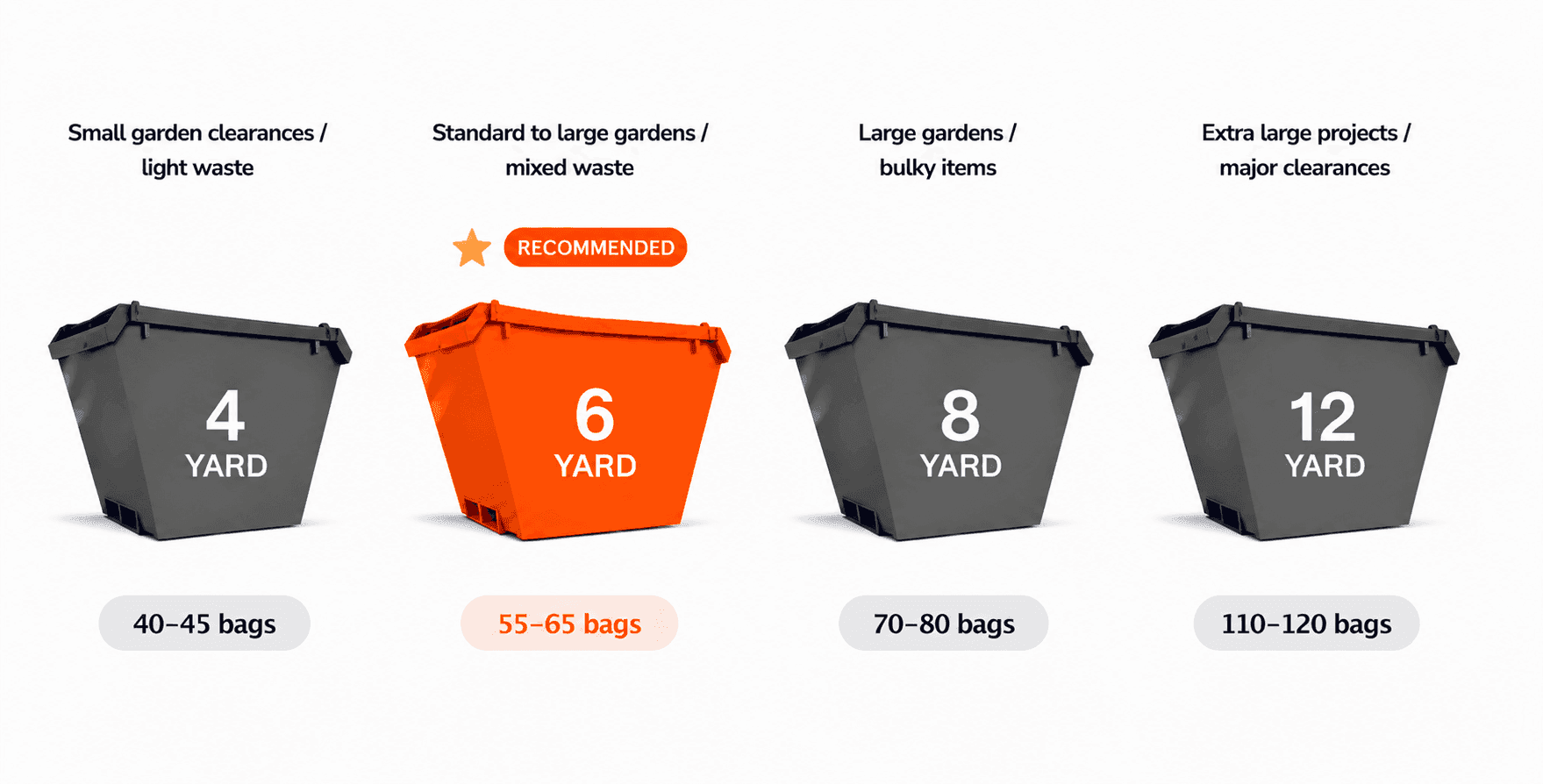
4Yard Skip
Best for small to medium garden clearances — green waste, old furniture, fencing panels, shed contents.
Holds ~40–45 bin bags. Fits on most driveways. If disposing of soil or rubble, limit to no more than 50% fill to stay within weight limits.
6Yard Skip
Best for large gardens, complete landscaping clear-outs, or where large amounts of bulky items (old sheds, extensive fencing, large tree stumps) need to go.
Holds ~55–65 bin bags. Most flexible option for domestic garden projects.
Recommended
Book 6 Yard →8Yard Skip
Best for large gardens, complete landscaping clear-outs, or where large amounts of bulky items (old sheds, extensive fencing, large tree stumps) need to go.
Holds ~70–80 bin bags.
Key Considerations for Garden Clearance Skip Hire
Before your skip is delivered, a few practical considerations will help the hire go smoothly and keep your garden clearance on track.
Access and Positioning
Garden clearance skips are often placed on the driveway or directly on a hardstanding area close to the garden. Make sure there is clear vehicle access for delivery, as easySkip's trucks require a minimum width of around 3 metres. Avoid positioning under low branches or overhead cables.
Permits and Highway Management
If your driveway cannot accommodate the skip, it can go on the public road, but you will need a skip permit from your local council (£25 to £75, allow 5 to 7 working days). easySkip can advise on permit requirements when you book.
Soil and Hardcore Weight Limits
Soil, rubble and hardcore are significantly heavier than green waste. If your clearance involves large quantities of soil or hard landscaping materials, discuss this with easySkip at booking — weight limits apply and a dedicated heavy waste skip may be more appropriate.
Neighbour Consideration
If the skip will partially block a shared access or narrow street, let your neighbours know in advance. For road-placed skips, easySkip will fit the required safety lights and cones as standard.
Separating Green Waste
If you have large volumes of purely green waste such as grass cuttings, leaves and hedge trimmings, a dedicated green waste collection may be more cost-effective than a skip. Contact easySkip to discuss the best option for your clearance.
How Long Can I Keep the Skip?
easySkip's garden clearance skip hire is designed to flex around your project timeline, whether you're clearing over a weekend or tackling a larger landscaping project in stages.

Standard Hire Period - Up to 14 Days
easySkip's standard hire period is 14 days, giving you enough time to work through your garden clearance at your own pace without feeling rushed. Most garden clearances are completed well within this window.

Extended Hire & Swap-Outs
If your clearance is larger than expected or you are tackling the garden in stages, contact easySkip to extend your hire or arrange a swap-out skip once the first is full. This is common on larger plots or where overgrown areas are cleared progressively.

Flexible Collection
Once your skip is full and you are ready, book your collection online or by phone. There is no need to wait for the end of your hire period, so you can collect early and keep your driveway or garden access clear.

Fit-to-Project Planning
Book your skip to arrive on the day you start clearing, not before. For larger garden projects involving landscaping contractors, coordinate the skip delivery with your contractor's start date to avoid the skip sitting unused for days.
Restricted Waste Streams in Garden Clearance
A standard garden clearance skip accepts most general garden waste, but certain materials are restricted by UK law and cannot be mixed with your regular skip load. Declare them at booking to avoid surcharges or rejected loads.

Asbestos in Garden Structures
Older sheds, garages and outbuildings (pre-2000) may contain asbestos cement in roofing panels or wall sheets. If you suspect asbestos, do not disturb it. Arrange a licensed asbestos survey and specialist removal before your skip is delivered.

Pesticides, Herbicides & Garden Chemicals
Old weedkillers, pesticides, fertilisers in containers and fuel for garden machinery cannot be placed in a standard skip. Dispose of these via your local household hazardous waste collection point.

Gas Bottles and Cylinders
Old BBQ gas canisters and patio heater cylinders cannot go in a standard skip. Return these to a licensed gas retailer or a designated collection point.

Soil and Hardcore (Large Quantities)
Large volumes of soil, concrete, bricks and hardcore must be declared at booking as these are significantly heavier than green waste and may require a dedicated heavy waste skip.

Tyres
Old wheelbarrow or garden machinery tyres cannot go in a standard skip under UK landfill regulations. Return these to a tyre retailer or your local household waste recycling centre.
What Can & Can't Go in Your Garden Clearance Skip
Important — Pre-Notification Required for Some Waste Types
Large quantities of soil and hardcore, asbestos-containing materials from garden structures, gas bottles and cylinders, and tyres cannot be accepted in a standard garden clearance skip. If your clearance generates these materials, you must tell easySkip at the point of booking so the waste type can be amended and the correct disposal route arranged. Under our terms and conditions, loading undeclared restricted items into a standard skip incurs a minimum surcharge of £100 + VAT, and the load may be rejected on collection.
✓ Can Put In
- Garden green waste (grass cuttings, leaves, hedge trimmings, prunings)
- Timber (old fencing, garden furniture, sheds broken down)
- Old pots, planters and garden ornaments (non-hazardous)
- Plastic garden furniture and equipment
- Weed membrane and plastic sheeting
- General mixed garden clearance waste
✕ Can't Put In
- Asbestos (common in pre-2000 shed and garage roofing)
- Pesticides, herbicides and garden chemicals in containers
- Gas bottles and BBQ canisters
- Soil and hardcore in large quantities (must be declared at booking)
- Tyres (wheelbarrow, ride-on mower)
- Electrical garden tools and equipment (WEEE regulations)
- Batteries (garden machinery, power tool batteries)