

Skip Hire Guide
What Size Skip Do I Need for a Bathroom Refit?
Last updated: October 2026
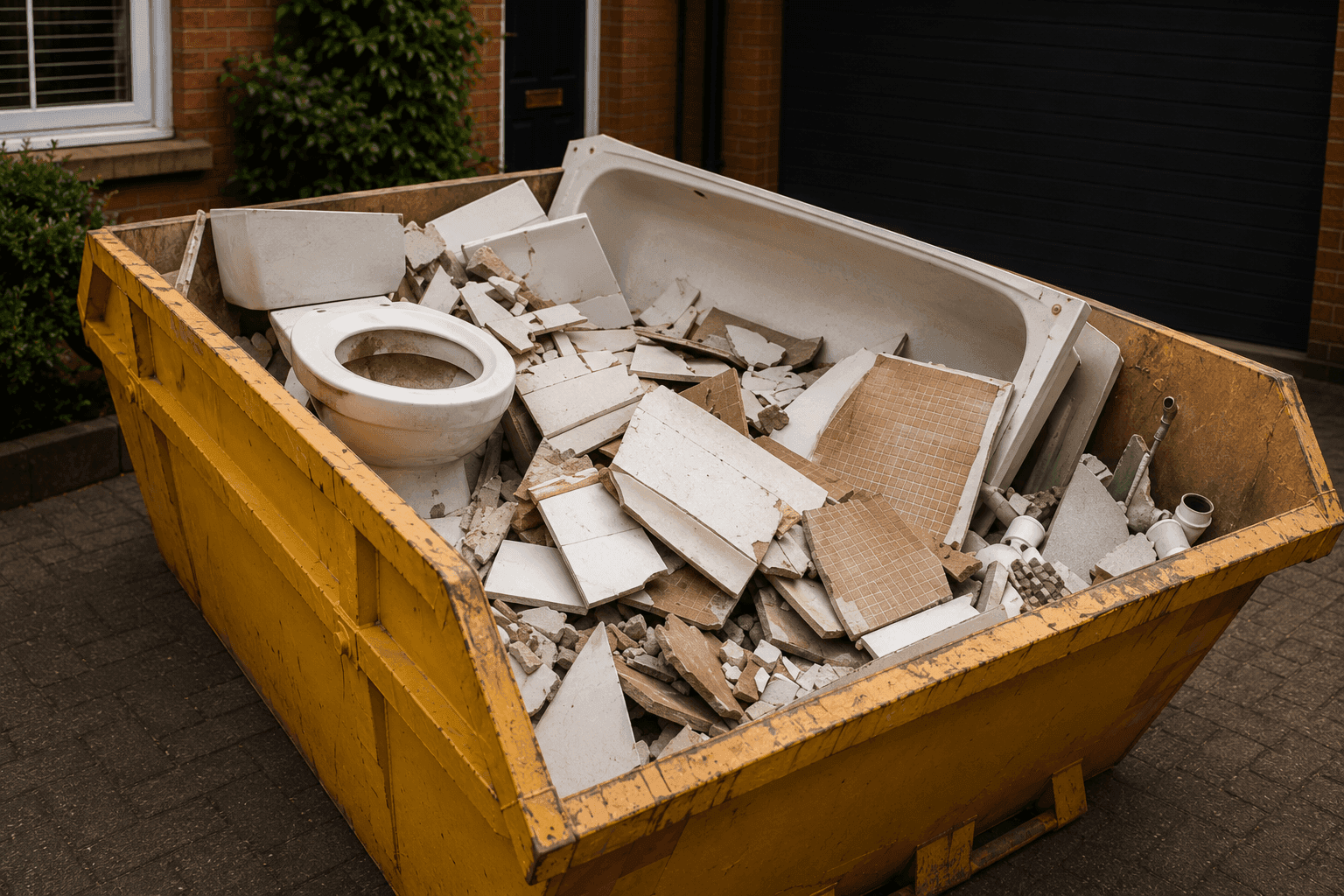
A bathroom refit is one of the most common home improvement projects in the UK — and it generates more waste than you might expect. Old baths, shower trays, tiles, toilets, basins, and plasterboard all need to go somewhere. For most bathroom refits, a 4 yard skip is the perfect fit. Larger en-suite or full bathroom overhauls may need a 6 yard skip.
Recommended
4
Yard Skip
40-50 bin bags
Quick Answer
For a standard bathroom refit, hire a 4 yard skip (holds 40–45 bin bags). Large bathrooms or full wet room conversions should use a 6 yard skip.
easySkip arranges bathroom refit skip hire in London, Manchester, Birmingham, Leeds, Glasgow and 1,000+ UK postcodes — same reliable service, same transparent pricing.
What Types of Waste Does a Bathroom Refit Produce?
A bathroom refit generates a surprisingly varied mix of waste — from heavy sanitary ware and tiles to plasterboard and packaging. Knowing what you'll be clearing out helps you choose the right skip size and avoid overloading on collection day.
Sanitary Ware
Old baths, shower trays, toilets and basins are the heaviest items in any bathroom strip-out. These are bulky but non-hazardous and can go straight in the skip. Break up acrylic baths where possible to save space.
Wall & Floor Tiles
Ceramic and porcelain tiles are dense and heavy. A fully tiled bathroom strip-out can add significant weight to your skip load. Place tiles at the bottom of the skip first to keep the load stable and maximise space.
Plasterboard & Backer Board
Wet room conversions and full retiles often involve removing and replacing plasterboard or tile backer board. Plasterboard cannot go in a standard skip regardless of quantity. Declare it at booking so easySkip can arrange the correct separate disposal route.
Old Flooring
Vinyl sheet, laminate, and old floor tiles from the bathroom floor can all go in a standard skip. Roll vinyl tightly before loading to save space.
Pipework & Fixings
Non-hazardous copper and plastic pipework, old taps, shower fittings, towel rails and miscellaneous fixings from the strip-out can all go in the skip.
Packaging Waste
New bathroom suite deliveries generate cardboard boxes, polystyrene packaging and plastic wrapping. This is often underestimated — factor it in when choosing your skip size.
Recommended Skip Size for Bathroom Refit
Choose the right skip size for your bathroom refit below. For most standard strip-outs, a 4 yard skip is the recommended choice, but bathroom size and the extent of tiling and plasterboard work will determine what works best for you.
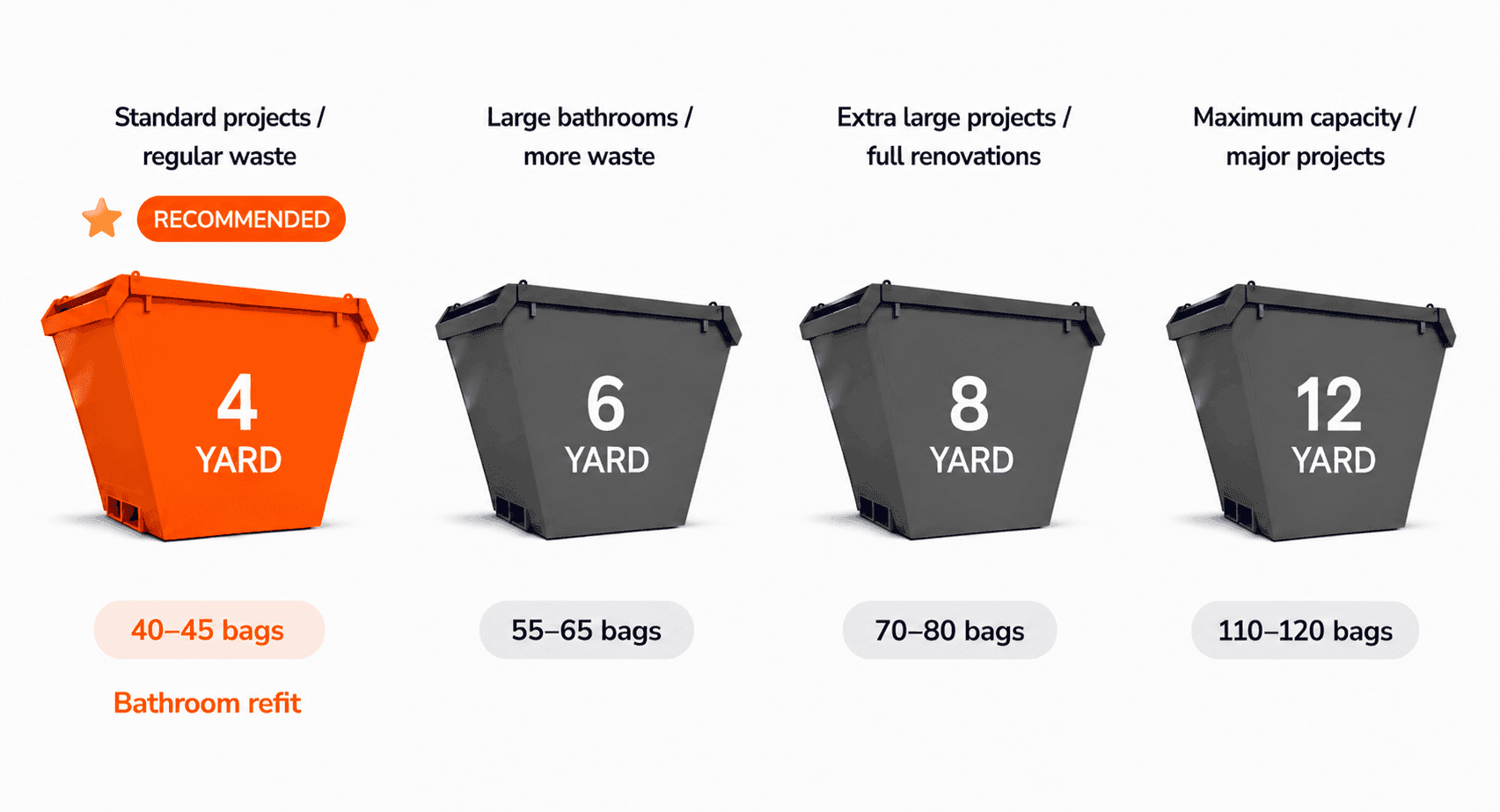
4Yard Skip
Best for standard bathroom strip-outs including old suite, tiles and flooring.
Holds 40 to 45 bin bags. Compact enough to fit on most driveways and the most popular choice for bathroom refits across the UK.
Recommended
Book 4 Yard →6Yard Skip
Best for larger bathrooms, en-suite and family bathroom combined projects, or where there is extensive wall tiling and plasterboard removal.
Holds 55 to 65 bin bags.
Key Considerations for Bathroom Skip Hire
Before your skip is delivered, a few practical considerations will help the hire go smoothly and keep your project on track.
Access and Positioning
Most bathroom refit skips are placed on the driveway. Make sure there is clear vehicle access for delivery, as easySkip's trucks require a minimum width of around 3 metres. Avoid positioning under low branches or overhead cables.
Permits and Highway Management
If your driveway cannot accommodate the skip, it can go on the public road, but you will need a skip permit from your local council (£25 to £75, allow 5 to 7 working days). Most bathroom refits use a 4 yard skip which fits on most standard driveways, making a permit unnecessary in most cases.
Neighbour Consideration
If the skip will partially block a shared access or narrow street, let your neighbours know in advance. For road-placed skips, easySkip will fit the required safety lights and cones as standard.
Waste Segregation
Keep any electrical items such as heated towel rails, electric showers and extractor fans separate from the start, as these are WEEE items and cannot go in the skip. Set them aside for council collection or a licensed WEEE recycling point.
How Long Can I Keep the Skip?
easySkip's bathroom refit skip hire is designed to flex around your project timeline, not the other way around.

Standard Hire Period
Your hire period is confirmed in your booking confirmation email, giving you enough time for a full bathroom strip-out, the refit itself and a final clear-up without feeling rushed. Most bathroom refits are completed well within the agreed window.

Extended Hire & Swap-Outs
If your bathroom renovation overruns, contact easySkip to extend your hire. Extensions are subject to availability and charged from £15 + VAT per day. Swap-out skips can also be arranged if your project generates more waste than expected.

Flexible Collection
Once your skip is full and you are ready, contact us to arrange collection online or by phone. Please note that collection dates are subject to supplier availability and may be delayed by up to 5 working days. There is no need to wait until the end of your hire period if you are finished early.

Fit-to-Renovation Planning
Book your skip to arrive the day demolition starts, not before. This keeps your driveway usable during delivery of your new bathroom suite and avoids the skip sitting empty for days.
Restricted Waste Streams in Bathroom Refits
A standard bathroom refit skip accepts most general waste, but certain materials are restricted by UK law and cannot be mixed with your regular skip load. These items require separate disposal routes — declare them at booking to avoid surcharges or rejected loads.

Electrical Items (WEEE)
Electric showers, heated towel rails, extractor fans, shavers sockets and any other electrical bathroom fittings cannot go in a standard skip. These are classified as Waste Electrical and Electronic Equipment (WEEE) and must be recycled separately via your local council or a licensed WEEE facility.

Hazardous Chemicals
Old sealants, adhesives, grout residue in containers, cleaning chemicals and paint cannot be placed in a standard skip. Dispose of these via your local household hazardous waste collection point.

Asbestos
Older bathrooms (pre-2000) may contain asbestos in floor tiles, textured coatings or pipe insulation. If you suspect asbestos, do not disturb it. Arrange a licensed asbestos survey and specialist removal before your skip is delivered.

Plasterboard
Plasterboard cannot go in a standard skip. It must be declared at booking so easySkip can arrange the correct separate disposal route. Loading undeclared plasterboard into a standard skip will incur a minimum surcharge of £100 + VAT and the load may be rejected on collection.

Fluorescent Light Tubes & Batteries
These contain hazardous materials and must not go in a standard skip. Return batteries to any retailer collection point and fluorescent tubes to a specialist recycling facility.

Gas Appliances
Gas boilers or any gas-connected appliances being removed as part of a bathroom renovation must be disconnected by a Gas Safe registered engineer before removal. They cannot go in a standard skip and must be disposed of via a licensed route.
What Can & Can't Go in a Bathroom Refit Skip
Pre-Notification Required for Some Waste Types
Large quantities of electrical items (WEEE), fluorescent tubes, batteries and gas appliances are not accepted in a standard bathroom refit skip. If your project generates these materials, you must tell easySkip at the point of booking so the waste type can be amended and the correct disposal route arranged. Under our terms and conditions, loading undeclared restricted items into a standard skip incurs a minimum surcharge of £100 + VAT, and the load may be rejected on collection.
✓ Can Put In
- Sanitary ware (baths, shower trays, toilets, basins)
- Wall and floor tiles
- Old flooring (vinyl, laminate, floor tiles)
- Pipework (non-hazardous, copper, plastic)
- Packaging cardboard and polystyrene
- Towel rails and non-electrical fixings
- General mixed renovation rubble
✕ Can't Put In
- Electrical items — electric showers, heated towel rails, extractor fans (WEEE regulations)
- Hazardous chemicals — sealants, adhesives, cleaning products, paint
- Asbestos (common in pre-2000 bathrooms, requires licensed removal)
- Fluorescent light tubes
- Gas appliances (must be removed by a Gas Safe registered engineer)
- Plasterboard — must be declared at booking, specialist disposal required