

Skip Hire Guide
What Size Skip Do I Need for a Driveway or Patio Removal?
Last updated: June 2026
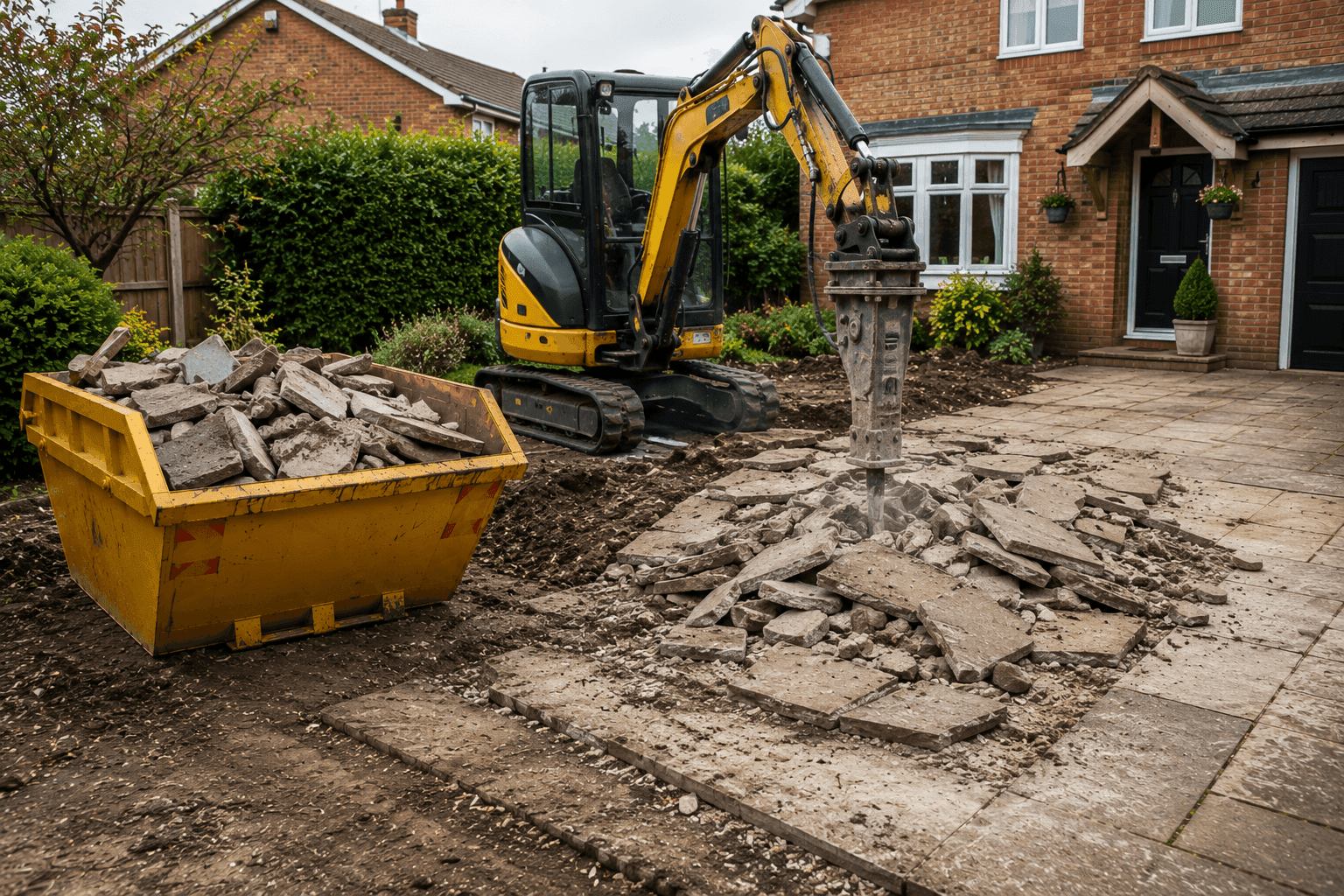
Removing an old driveway or patio involves some of the heaviest waste generated by any home improvement project — concrete slabs, tarmac, paving stones, hardcore and sub-base all add up to enormous weight very quickly. This is why choosing the right skip size for driveway and patio removals is absolutely critical: weight limits, not volume, are the governing factor. For driveway and patio waste, a 6 yard skip is the recommended maximum size.
Recommended
6
Yard Skip
40-60 bin bags
Quick Answer
For driveway or patio waste (concrete, tarmac, paving slabs, hardcore), always use a 6 yard skip as the maximum size. These materials are so heavy that even a 6 yard skip can reach its weight limit before it is half full. Never use a larger skip for this type of waste — it will be too heavy to collect.
easySkip delivers to London, Manchester, Birmingham, Leeds, Glasgow and 1,000+ UK postcodes — next-day delivery available on 4 and 6 yard skips.
Why Driveway and Patio Waste Is Different to Other Skip Waste
Driveway and patio removals generate some of the densest, heaviest waste materials found in any domestic project. Unlike household clearance or even kitchen renovations, the governing factor is weight — not volume. A skip can look half-empty and already be at its collection limit.
Concrete
Approximately 2.4 tonnes per cubic metre. The heaviest common driveway material. Poured concrete slabs and concrete block paving fill a skip's weight limit extremely quickly.
Tarmac / Asphalt
Approximately 2.3 tonnes per cubic metre. Almost as heavy as concrete. Old tarmac driveways often have multiple layers, multiplying the total weight.
Paving Slabs
Approximately 1.8–2.2 tonnes per cubic metre for natural stone or concrete slabs. Individual slabs are manageable but accumulate weight rapidly in volume.
Sub-Base Hardcore
Approximately 1.5–2.0 tonnes per cubic metre. If you're removing the full depth of driveway construction including the compacted hardcore layer, sub-base adds significant extra weight.
Block Paving
Individual blocks are lighter than poured concrete and can often be recycled or reused — worth considering before skipping. If blocks are in good condition, reclaim them for reuse or sell them on.
Gravel and Loose Stone
Approximately 1.5–1.8 tonnes per cubic metre. Loose gravel and decorative stone is lighter than concrete but still heavy. More manageable in a 4 or 6 yard skip.
Recommended Skip Size for Driveway and Patio Removal
For driveway and patio waste, skip selection is driven entirely by weight limits — not how much space you need. Never order a larger skip thinking you'll fit more in: a 10, 12 or 14 yard skip filled with concrete or tarmac will be dangerously overweight and cannot be legally collected.
4Yard Skip
Ideal for small patio removals — up to approximately 10–15m². Holds 40–45 bin bags by volume, but for heavy paving or concrete, weight limit is reached well before that. Good for thin pavers, loose gravel, or a small decorative patio.
6Yard Skip
The maximum skip size for concrete, tarmac, paving slabs and hardcore. Holds 55–65 bin bags by volume — but for driveway waste, fill to approximately 50–60% only to stay within the 6 tonne weight limit. The right choice for standard driveway and patio removals.
Recommended
Book 6 Yard →Key Considerations for Driveway & Patio Skip Hire
Driveway and patio projects have a few unique factors to plan for before your skip arrives — weight limits and site access matter more here than on most domestic jobs.
Skip Placement on Your Driveway
Ensure you have enough clear space before delivery — a 4 yard skip needs approximately 8ft × 5ft, a 6 yard skip needs approximately 10ft × 5ft. Once positioned, a full skip cannot be easily moved. Choose the location carefully before the driver arrives.
Weight Limits Are Non-Negotiable
Overweight skips cannot be legally transported. If a skip is found to be over its weight limit on collection, it will not be taken and additional charges may apply. Always fill heavy driveway materials to a maximum of 50–60% of the skip's visual capacity.
Permits for Road Placement
If your skip must be placed on a public road or pavement — for example if you have no driveway space during the project — a council permit is required. easySkip arranges permits on your behalf. Permits typically cost £30–£80 and must be in place before delivery.
Booking Multiple Skips Sequentially
For larger driveways requiring 2–4 skips, book them sequentially rather than all at once. Fill the first skip, arrange collection, then have the next one delivered. This avoids having multiple skips on site simultaneously and keeps your access clear throughout the project.
Waste Transfer Documentation
Even for domestic driveway projects, your skip hire company must be a licensed waste carrier. easySkip's licensed carriers provide Waste Transfer Notes as standard — keep these for your records, particularly if you are a landlord or managing an investment property.
How Long Can I Keep the Skip?
Hire period is worth planning carefully for driveway projects — breaking up and removing concrete or tarmac is hard physical work and most people spread it over several days rather than doing it all at once.

Standard Hire Period
Hire period is confirmed in your booking confirmation email and is tailored to your project. Most driveway and patio removals are completed comfortably within the agreed window — you can break up the material at your own pace and load as you go. If you need more time, extensions can be arranged subject to availability.

Extended Hire & Swap-Outs
For larger driveway projects spanning multiple phases — for example surface removal followed by sub-base excavation — extended hire can be arranged subject to availability, and will incur additional charges from £15 + VAT per day. Alternatively, a swap-out service where a full skip is collected and a fresh one delivered can also be arranged. Useful when you're working around other contractors such as landscapers or driveway layers. Contact us to discuss the best option for your project timeline.

Flexible Collection
Once your skip is full, contact us to arrange collection. Collection dates are estimates and may be subject to supplier availability and scheduling — we'll always aim to collect as promptly as possible. Don't overfill your skip waiting for the hire period to end; an overfilled skip incurs a minimum surcharge of £50 + VAT and may be refused collection until excess waste is removed.

Project Planning for Large Driveways
For larger driveways requiring multiple skips, book in advance with agreed collection windows that fit around your project timeline. easySkip can help you schedule sequential deliveries so there's no gap in your project.
Restricted Waste Streams in Driveway & Patio Removals
Driveway and patio projects occasionally uncover materials that cannot go into a standard skip. Declare anything unusual at the point of booking so easySkip can arrange the correct disposal route.

Asbestos
Asbestos-cement materials are sometimes found in older garage bases, outbuilding floors, and driveway constructions in pre-1980s properties. If you suspect asbestos, stop work immediately — do not break up or disturb the material. Asbestos requires specialist removal and testing before any skip can be placed. It cannot go in a standard skip under any circumstances.

Contaminated Soil
Soil or hardcore contaminated with fuel, oil, or chemical spillage from garages or outbuildings requires specialist disposal and cannot go in a standard skip. If you notice unusual odours or discolouration when excavating, declare it at booking.

Plasterboard
If your driveway project involves demolishing a garage or outbuilding with plasterboard walls, the plasterboard must be declared separately at booking and cannot be mixed into a standard skip with heavy driveway waste.

Tyres
Old tyres — sometimes buried under driveways or found in garages during clearance — are prohibited in standard skips and require specialist disposal.

Hazardous Chemicals and Oils
Old fuel, engine oil, solvents, or pesticides sometimes found in garages cannot go in a skip. Arrange separate specialist collection or take to your local household hazardous waste facility.
What Can & Can't Go in a Driveway & Patio Skip
Pre-Notification Required for Some Waste Types
Asbestos-containing materials, contaminated soil, tyres and hazardous chemicals are not accepted in a standard driveway skip. If your project uncovers any of these materials, you must tell easySkip at the point of booking so the correct disposal route can be arranged. Under our terms and conditions, loading undeclared restricted items into a standard skip incurs a minimum surcharge of £100 + VAT, and the load may be rejected on collection.
✓ Can Put In
- Concrete slabs and broken concrete
- Tarmac and asphalt | weight limits apply)
- Natural stone paving (sandstone, limestone, granite)
- Block paving bricks
- Gravel and shingle
- Sub-base hardcore
- Old edging stones and kerbs
- Soil from under driveway
- Old sand and cement bedding
- Mixed light waste IF under weight limit
✕ Can't Put In
- Contaminated tarmac / asphalt (from very old roads — may contain tar which is hazardous)
- Asbestos cement — rare but possible in old garage bases
- Chemical containers, paint or oils
- Electrical items
- Tyres
- Batteries
- Any liquid waste
- Plasterboard — must be declared separately at booking