


Skip Hire Manchester in Wet Weather: Rain's Hidden Weight Problem
David Doe• 16.10.2026

How a September downpour taught me why overweight charges hit harder than you'd expect
The Morning Everything Went Wrong
Standing in a customer's driveway on a grey Tuesday morning in September 2019, I watched our driver shake his head at the 8-yard skip we'd come to collect. What should have been a straightforward pickup in Didsbury had turned into something else entirely. The skip looked normal from a distance, filled with the usual mix of household renovation waste. But three days of Manchester rain had soaked through everything.
I'd been managing site clearances around Greater Manchester for eleven years by then, and I thought I understood skip hire Manchester inside out. The weight limits, the permit requirements, the logistics of getting skips in and out of narrow Victorian streets. But I'd never properly calculated what happens when water gets involved.
That morning taught me why skip hire Manchester customers need to think differently about their bookings when the weather forecast shows rain. The scales don't lie, and neither do the additional charges that follow.
What Rain Actually Does to Skip Weight
The driver climbed back into his cab and called me over. "This one's going to be over," he said, pointing at the skip. Inside, what had started as dry plasterboard, old timber, and bagged rubble had transformed into something much heavier. The plasterboard had absorbed water like a sponge. The timber pieces, which might have weighed 40kg when loaded, now held litres of rainwater in their grain.
I pulled out a couple of the builder's bags from the top layer. Each one felt substantially heavier than it should have. Water had seeped through microscopic holes in the plastic, and even the bags that looked intact had collected rainwater in their folds and corners. We had two options. Pay the skip overweight charges (which I knew would be substantial), or spend an hour transferring some of the heaviest items to a second skip. Neither option made the customer happy.
The Maths Behind Wet Waste
Here's what I learned that day about how water adds up:
Plasterboard can absorb up to 60% of its weight in water, turning a 12kg sheet into a 19kg sheet
Old carpet soaks up roughly 3 litres per square metre, adding 3kg to every square metre of flooring waste
But the real problem isn't individual items getting heavier. It's the cumulative effect across an entire skip load, plus the water that pools at the bottom of the container itself.
In that Didsbury skip, I estimated we had about 127 litres of standing water in the base, plus whatever had been absorbed by the waste materials. That's 127kg of pure additional weight before you even count the absorption effect.
Which Materials Cause the Biggest Problems
Some waste types turn into weight traps the moment they get wet. Fabric and textiles are obvious culprits, but they're not usually the heaviest contributors in a typical household clearance.
The materials that caught me out most often were:
Chipboard furniture, which swells and retains water even after the rain stops
Insulation materials like mineral wool, which can hold several times their dry weight in water
Paper and cardboard waste, especially if it's been compressed into bags
Any bagged waste where the bags aren't completely watertight
Garden waste mixed with household items, because soil acts like a sponge for the entire skip contents
I once collected a skip from a house renovation in Chorlton where the homeowner had mixed old books with kitchen renovation debris. Three days of drizzle had turned those books into solid blocks of pulp, each weighing about four times what they should have.
How Manchester Weather Patterns Make It Worse
Manchester gets rain on approximately 156 days per year, but it's not evenly distributed. We see clusters of wet days, especially between October and February, when a skip might sit outdoors for several consecutive rainy days before collection.
The worst scenarios happen when light, persistent rain continues for 48 hours or more. Heavy downpours actually cause fewer problems because they run off quickly and don't have time to soak through everything. It's the steady drizzle that really adds the tonnage.
I remember one job in Levenshulme where we'd placed a skip on the Thursday before a weekend of constant light rain. By Monday morning, what should have been a 2.5-tonne load had become nearly 4 tonnes. The skip overweight charges ended up costing the customer an extra £89.
Practical Ways to Reduce Rain Weight
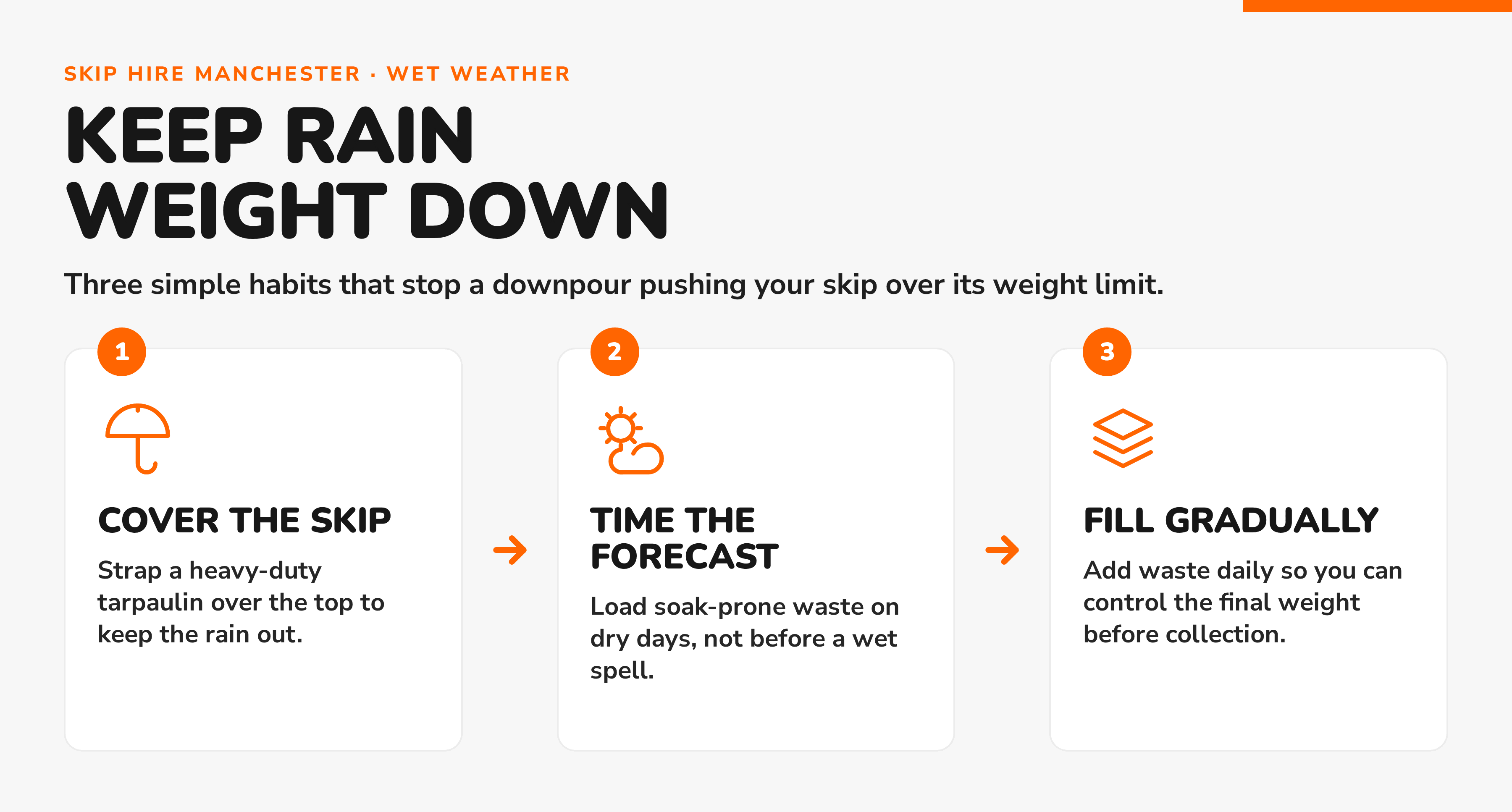
The most effective solution is covering your skip completely, but not everyone thinks to do this when they book. Heavy-duty tarpaulin works well if you can secure it properly around the skip edges. I've seen people use everything from old carpets to plastic sheeting, though these tend to blow off in strong winds.
Timing your waste disposal makes a bigger difference than most people realise. If you know rain's coming, load absorbent materials like plasterboard and timber first, then cover them with less absorbent items like metal or ceramics.
One approach that works particularly well is to keep your skip under weight limits by monitoring what goes in daily rather than filling it all at once. This gives you more flexibility to manage the final load if rain becomes a factor.
Understanding Weight Limits and Overage Charges
Most Manchester skip hire companies set their weight limits based on vehicle licensing and road safety requirements. A standard 8-yard skip typically has a weight limit of around 8 tonnes, but this varies between companies and skip sizes.
The challenge is that these weight limits across all skip sizes don't account for weather conditions. When you book a skip, you're agreeing to stay within the stated weight limit regardless of whether rain adds extra tonnage.
Overage charges typically range from £15 to £25 per additional tonne, though some companies charge a flat rate for any amount over the limit. I've seen customers face surprise bills of over £100 when wet weather pushed their skip significantly over capacity.
The enforcement varies between companies, but most will weigh suspicious loads. Any skip that looks fuller than usual, sits lower on the vehicle, or contains obviously wet materials is likely to get checked.
What to Do When Rain Hits Your Project
If heavy rain catches your skip unexpectedly, you have several options before collection day. Removing the wettest items and disposing of them separately often costs less than paying overage charges. This works particularly well with items like soggy cardboard or waterlogged timber offcuts.
Some Manchester customers I've worked with have successfully negotiated with their skip hire company to extend the hire period by a day or two, allowing wet materials to drain naturally. This doesn't work for everything, but it can reduce the total weight enough to avoid charges. For ongoing projects, companies like easyskip.uk often provide practical advice about managing weight limits during wet weather, since they deal with this issue regularly across Manchester and surrounding areas.
Next time you book a skip during Manchester's unpredictable weather months, check the extended forecast before you start loading. A little forward planning can save you from discovering that rain really does have weight.