


Skip Hire London: When Your Skip Makes Friends With the Neighbours
David Doe• 16.10.2026

How a facilities manager learned to keep the peace on shared streets
I'd arranged the skip for a Tuesday morning in February 2019, thinking I was being clever by placing it right outside our office block in Bermondsey. The permit was sorted, the space measured twice, and I'd even checked the weather forecast. What I hadn't counted on was Mrs Chen from the dry cleaner next door appearing at 7:43 AM with a face like thunder and a very valid complaint about her customers not being able to park.
That morning taught me more about London neighbour skip etiquette than five years of managing commercial waste had done. The skip itself was fine, positioned legally on Grange Road with all the paperwork in order. But fine and neighbourly aren't the same thing, and in London's packed streets, that distinction matters more than you might think.
I've handled dozens of skip hire London jobs since then, from small office clearances to major refurbishments, and I've learned that the technical side is often the easy part. Getting a permit from Southwark Council cost £65 for seven days, the 6-yard skip arrived exactly when promised, and the collection happened without a hitch. The tricky bit was everything that happened in between.
Reading the Unwritten Rules of Your Street
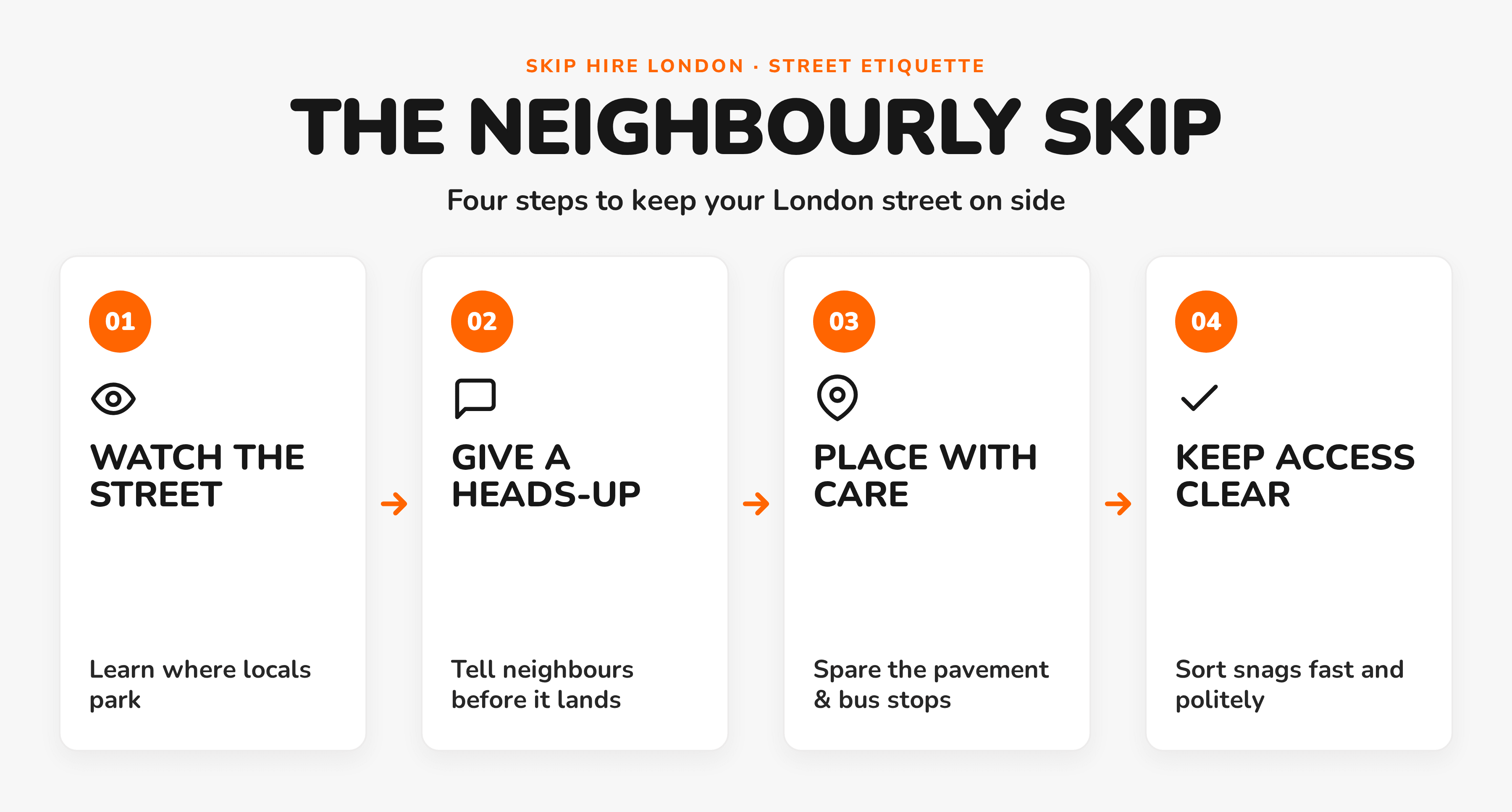
Every London street has its own rhythm, and dropping a skip into that rhythm without thinking is like interrupting a conversation. I learned this the hard way on Tooley Street the following autumn, when I positioned a skip perfectly legally but right where the market traders had been parking their vans for the past decade.
The council permit gives you the legal right to the space. It doesn't give you immunity from dirty looks, passive-aggressive notes, or the kind of neighbourhood tension that can make your life awkward for weeks.
Watch the street for two full days before the skip arrives
Note which spaces locals treat as theirs, even if they're not marked
I've found that residential streets in places like Dulwich or Blackheath tend to have more flexibility, while commercial areas near Borough Market or around the City can be territorial in ways that catch you off guard. One Thursday morning near London Bridge, I watched a taxi driver spend eleven minutes trying to squeeze past a 4-yard skip that was legally placed but positioned with zero consideration for traffic flow.
The Courtesy Conversation
Now I always knock on doors before the skip arrives, not after. This isn't required by law, and some people will tell you it's unnecessary faff. But I've seen too many situations turn sour because someone felt ambushed by a skip appearing overnight without warning.
Mrs Chen, it turned out, wouldn't have minded the skip at all if she'd known it was coming. Her complaint wasn't really about the parking, it was about waking up to find her business access blocked without any heads-up. Fair enough, when you put it like that.
The conversation doesn't need to be lengthy or formal:
When the skip's arriving and leaving
Whether you'll need access during certain hours
If there's a better spot they'd suggest
Whether they've got anything they'd like to add to it (though be careful here)
Your contact number in case problems arise
Positioning for Minimal Disruption
London streets weren't designed for skips, and some days that shows more than others. I've placed skips on narrow Victorian terraces in Islington where every inch matters, and on wide residential roads in Richmond where you've got options. The council permit tells you where you can put it. Common sense tells you where you should.
Leave walking space. This sounds obvious until you're dealing with a street where the pavement's barely wide enough for a pushchair to begin with. I misjudged this completely on a job in Hackney, where the skip was legally positioned but forced pedestrians into the road to get past. Not ideal, and definitely not neighbourly.
Managing the Shared Street Dynamic
A shared street skip changes the whole character of the road for the week it's there. In areas like Clapham or Wandsworth, where parking's already competitive, your skip isn't just taking up space, it's reshuffling everyone else's carefully worked-out arrangements.
I watched this play out on a residential street near Battersea Park, where my skip displaced one car, which then took another resident's usual spot, which created a domino effect of parking musical chairs that lasted the entire week. The unwritten rules of skip etiquette become crucial in situations like this, where multiple households are affected by your waste disposal needs.
What Goes Wrong and How to Fix It
People will put things in your skip. This happens regardless of how clearly you mark it as private or how often you explain that mixing different types of waste can cause problems with disposal. I've found carrier bags of household rubbish, garden cuttings, and once memorably, a broken office chair that definitely didn't come from our renovation.
The neighbour who does this isn't necessarily being malicious. Sometimes they genuinely think they're being helpful. Other times they're testing boundaries. Either way, addressing it quickly and directly works better than letting resentment build up.
I also learned to position skips away from bus stops after a incident in Greenwich where the bin lorry couldn't collect because a double-decker was parked alongside. The driver waited twenty-three minutes before giving up, which meant rearranging collection for the following Tuesday and extending the permit.
The Costs of Getting It Wrong
That first skip in Bermondsy ended up costing more than just the £340 I'd budgeted for hire and permit. Mrs Chen's dry cleaning business lost customers that week because of the parking disruption. She didn't ask for compensation, but the relationship with that whole row of shops stayed frosty for months afterward.
More practically, I've seen skips damaged by frustrated drivers trying to squeeze past poorly positioned containers. One 8-yard skip on a job near King's Cross got its side panel dented by a delivery van whose driver couldn't judge the gap properly. The damage wasn't severe enough to affect function, but it did result in a £180 repair charge that could have been avoided with better skip placement London planning.
Extra permit days if collection gets delayed
Repair costs if the skip gets damaged
When Neighbours Want to Share
Sometimes the conversation about your skip leads to requests to share the space. This can work brilliantly, splitting costs and making efficient use of capacity. But it can also create complications if you're not clear about arrangements from the start.
I've seen neighbours fall out over who was responsible when mixed waste in a shared container led to additional sorting charges. The pros and cons of sharing a skip need thinking through properly, especially around liability and what types of waste each party will contribute.
One arrangement in Putney worked perfectly because both households were doing kitchen renovations and the waste types were similar. Another in Lewisham became awkward when one neighbour kept adding garden waste to what was meant to be a construction-only skip.
Learning the London Variations
Different boroughs handle permits differently, and local attitudes vary too. Kensington and Chelsea residents expect a certain level of consideration that might seem excessive in other areas. Meanwhile, some parts of Tower Hamlets have a more relaxed approach to shared space that works in their favour.
I've found that areas with active residents' associations tend to have stronger opinions about skip placement. This isn't necessarily a bad thing, as these groups often have good suggestions about timing and positioning that you wouldn't think of yourself.
The morning delivery slots that work well in quiet residential areas can cause chaos on busy commercial streets. I learned this during a Shoreditch job where the skip arrived during the morning rush and the delivery lorry blocked traffic for seventeen minutes while maneuvering into position.
Companies like easyskip.uk have experience with London's particular challenges and can often suggest timing or placement adjustments that make the whole process smoother for everyone involved. They understand that getting the technical aspects right is only half the job in a city where space is precious and neighbours are close.
Next time you're planning a skip, spend an hour watching your street during the time of day when the skip will arrive. You'll spot the patterns that matter most to the people who live and work there.