


Why One 14 Yard Skip Cleared My Entire Three-Storey House in Salford
David Doe• 27.10.2026

How Greater Manchester's biggest skip size handles full clearances across multiple boroughs in a single hire
I was standing in my nan's terraced house on Eccles Old Road last October, looking at three floors of accumulated belongings, when the estate agent rang to say we had a viewing booked for the following Tuesday. That gave me exactly six days to clear everything out before potential buyers arrived. The house had been in the family for forty-seven years, and every room told that story in furniture, books, ornaments and boxes I'd never seen opened.
My first thought was multiple trips to the tip, but the nearest household waste recycling centre in Trafford had started charging for certain items, and I'd need my car for work that week. Then I remembered seeing those massive skips outside houses in Chorlton and wondering how much waste they actually held.
A quick search led me to 14 yard skip hire Manchester options, and I discovered that these giants can hold roughly the same volume as a large van, but they'll sit on your drive for up to two weeks. The skip company I contacted quoted me £340 for the fortnight, which seemed steep until I worked out that three van loads to the tip, including fuel and the new disposal charges, would cost me nearly £180 anyway.
Understanding 14 Yard Skip Capacity
The driver who delivered my skip on that drizzly Thursday morning explained that a 14 yard skip hire typically measures about 12 feet long, 6 feet wide and 5 feet high. But the real revelation came when he mentioned the weight limit.
These skips can legally hold up to 10 tonnes, though most household clearances rarely approach that figure unless you're disposing of building materials or soil. My nan's house clearance, despite filling the skip to about 80% capacity, weighed just over 3 tonnes according to the weighbridge ticket I received later.
The volume is what matters for house clearance Manchester jobs. I managed to fit:
A three-piece suite from the 1980s, including a sofa bed that took four of us to move
Two single wardrobes and a dressing table from the back bedroom
Approximately 200 books, magazines and photo albums
Kitchen appliances including a chest freezer and an ancient washing machine
Garden furniture that had been stored in the cellar for years
And that's before I mention the 47 bin bags of clothes, linens and miscellaneous items that filled every gap.
Permit Requirements Across Greater Manchester Boroughs
One aspect I hadn't considered was where exactly to position the skip. Nan's house had a small front garden, but the driveway couldn't accommodate a 14-yard container without blocking next door's access completely.
This meant applying for a highway permit through Salford City Council, which cost me an additional £35 for the two-week period. The process took three working days, so I had to factor that into my timeline. What surprised me was learning that Stockport charges £45 for the same permit duration, while Trafford keeps theirs at £30.
These differences matter when you're planning a Greater Manchester skip hire across borough boundaries. If you're flexible about skip placement, it might be worth checking which council area offers the most economical permit fees for your timeframe.
Loading Strategy for Maximum Efficiency
I made my biggest mistake on day two of the clearance. I'd been throwing everything in randomly, and by Saturday afternoon, the skip was three-quarters full but I still had the entire top floor to clear. The furniture was creating air pockets, and I was wasting precious space.
My brother-in-law, who works in construction, came round on Sunday and taught me the proper loading technique. We emptied about a quarter of the skip and started again, placing flat items like the dismantled wardrobe doors along the bottom and sides. Sofas and chairs went in upside down, and we filled every cavity with bags and smaller items.
This reorganisation gave me another day's worth of capacity, enough to handle the loft clearance that I'd been dreading.
What You Cannot Put in a 14 Yard Skip
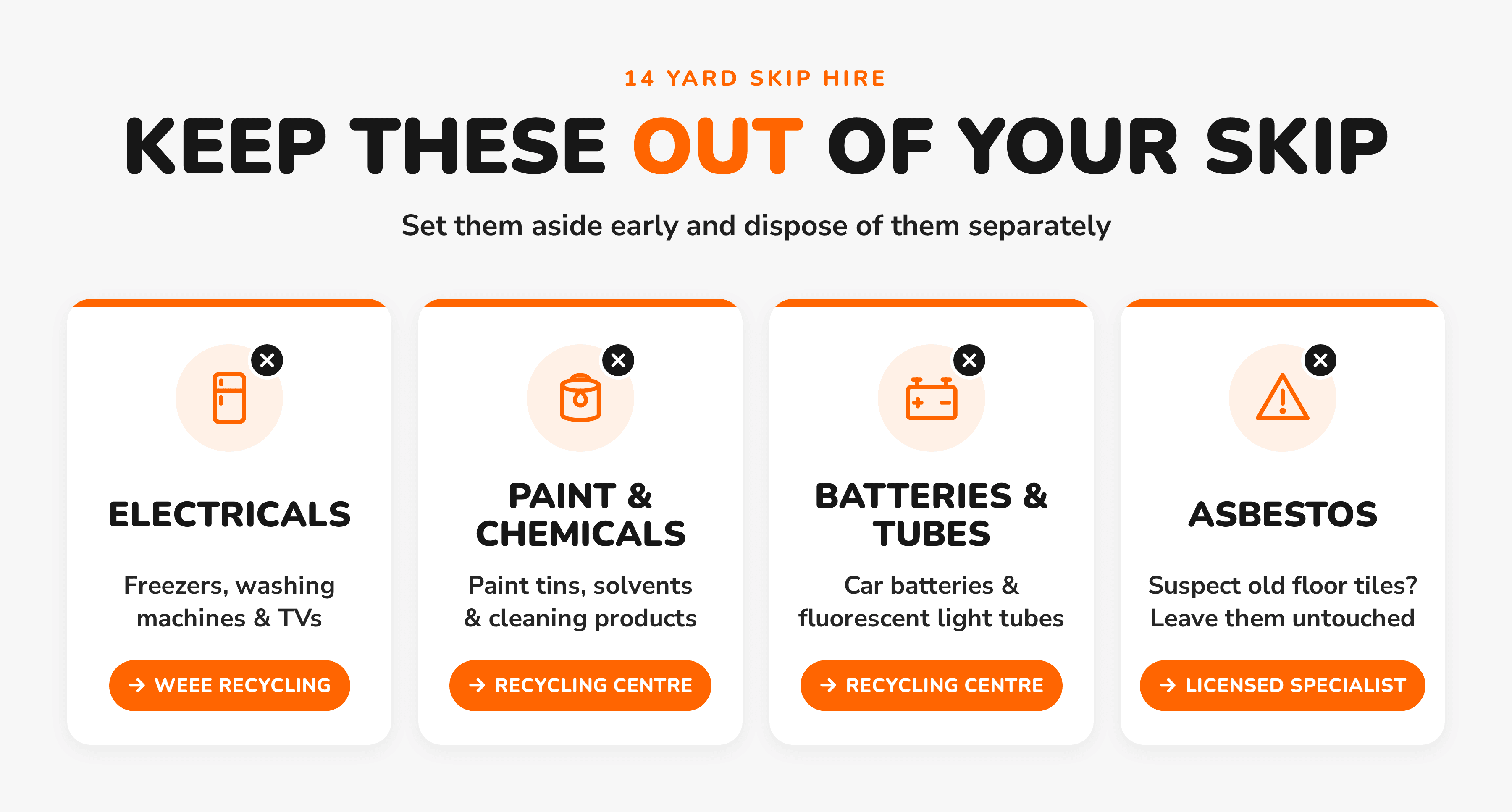
The skip company had provided a comprehensive list of prohibited items, but I encountered several grey areas during the actual clearance. Paint tins were definitely out, but I found myself with half-empty bottles of cleaning products that weren't clearly hazardous waste.
I ended up taking these to the household waste centre separately, along with:
A car battery from nan's old Ford that had been sitting in the garage
Several fluorescent light tubes from the kitchen ceiling
The asbestos question came up when I found some old floor tiles in the cellar. Rather than risk it, I left them for a specialist removal company to assess later. The skip driver confirmed this was the right approach when he collected the container on the final Friday.
Electrical items proved more flexible than I'd expected. The washing machine and chest freezer went in without question, but the old television needed its cable cut off first.
Cost Comparison with Alternative Clearance Methods
By the time the skip was collected, I'd kept detailed notes of everything that went in, partly out of curiosity and partly because the estate agent had asked for a clearance inventory. The final tally helped me understand exactly what that £340 had bought me.
A professional house clearance Manchester service had quoted me £890 for the same job, though they would have handled all the labour and disposal arrangements. Three separate van hires would have cost me roughly £210, plus fuel, plus my time for six round trips to various disposal points.
The skip option sat comfortably in the middle, giving me control over the timeline while avoiding the physical strain of multiple van loads. I particularly valued being able to work at my own pace across the two weeks, tackling one room at a time rather than rushing to empty a hired van by 6pm each day.
Seasonal Considerations for Large Skip Hire
October turned out to be excellent timing for the clearance, though not for reasons I'd anticipated. The skip company mentioned that demand drops significantly after the summer house-moving season, which meant I could book for my preferred dates without the three-week wait I'd been warned about.
Weather played a bigger role than I'd expected. The skip had a solid base, but loading it in constant drizzle made everything heavier and more awkward to handle. I ended up covering furniture with old sheets before loading, which probably saved me from exceeding the weight limit when the rain really set in during week two.
Winter bookings apparently come with their own challenges, particularly around Christmas when skip companies operate reduced collection schedules. Several neighbours mentioned struggles getting skips collected between December 22nd and January 4th, which is worth remembering if you're planning clearances around year-end house sales.
Documentation and Duty of Care
I received three separate pieces of paperwork during the hire period. The delivery receipt, the highway permit copy, and the final weighbridge ticket that showed where my waste had been processed. This last document proved useful later when the estate agent's buyer raised questions about environmental compliance during the conveyancing process.
Understanding these full house clearance strategies before you start can save considerable time and stress during the actual clearance. The duty of care requirements mean that you're legally responsible for ensuring your waste reaches an authorised facility, regardless of which skip company you choose.
I kept photographs of the skip contents before collection, mainly for insurance purposes, but this documentation also helped when calculating the precise volumes for future reference. The visual record showed exactly how we'd managed to fit three floors of belongings into a single container.
The experience taught me that clearing your home before selling involves more logistical planning than I'd anticipated, but the right skip size makes an enormous difference to the timeline and stress levels involved.
Next time I'm handling a comparable clearance, I'll book the skip for three weeks rather than two, just to avoid that last-minute panic. The extra cost is negligible compared to the peace of mind, and it allows for proper sorting rather than simply throwing everything away in desperation.