


12 Yard Skip Hire Leeds: Managing Extension Waste From Foundation to Finish
Sarah Baker• 26.10.2026

A site manager's guide to waste planning for Yorkshire stone extensions across every phase of construction
I stood in the back garden of a Victorian terrace in Chapel Allerton on a Tuesday morning in March 2023, watching the excavator tear into what had been a perfectly decent lawn. The homeowners wanted a two-storey rear extension clad in reclaimed Yorkshire stone, and I'd already made my first mistake. I'd ordered a 6-yard skip for the dig-out phase, thinking it would handle the soil and rubble from the foundations without any trouble.
The skip was full by 11:30am, and we hadn't even finished marking out the footings. The clay soil came up in dense, heavy clumps that weighed far more than I'd calculated, and the existing concrete pad we had to break out added another 2.3 tonnes I hadn't factored in properly. Standing there with half a foundation trench dug and nowhere to put the rest of the spoil, I learned why experienced builders always overestimate their waste capacity rather than trying to squeeze everything into the smallest possible container.
That's when I discovered the value of 12 yard skip hire Leeds services for extension projects. The larger skip arrived that same afternoon, and suddenly we had the breathing room we needed to complete the excavation without constantly worrying about waste disposal logistics. Over the next eighteen months managing similar projects across Headingley, Roundhay and Horsforth, I've come to see the 12 yard skip as the sweet spot for most two-storey extensions, particularly when you're working with traditional materials like Yorkshire stone.
Foundation Phase Waste Volumes
The excavation phase generates the heaviest waste you'll encounter during any extension project. On that Chapel Allerton job, we removed 34 tonnes of material in total. Dense clay soil, old concrete footings, and the remnants of a 1960s concrete path all had to go somewhere, and it had to go quickly to keep the project moving.
Most builders underestimate soil density. I certainly did. A cubic metre of wet clay can weigh 1.9 tonnes, compared to about 1.4 tonnes for sandy soil. When you're digging foundations for a 4m by 6m extension and going down 1.2m for the footings, you're looking at roughly 29 cubic metres of excavation. Add in the allowance for working space around the foundations, and you quickly reach volumes that overwhelm smaller skips.
The logistics matter too. Excavators work efficiently when they can dump material directly into a skip rather than stockpiling it on the garden and double-handling later. On constrained urban sites, which describes most of Leeds extension waste scenarios I've managed, you don't have room for temporary spoil heaps. The waste has to go straight from the bucket into the container.
Material Separation During Dig-Out
I learned to separate materials right from the start of excavation, even though it feels slower initially. Clean topsoil goes to one side of the skip, clay subsoil fills the middle section, and any concrete or brick rubble gets loaded at the back end where it won't shift during transport.
This separation serves two purposes:
It prevents contamination that could make the entire skip load unsuitable for recycling
Clean soil can sometimes be reused for backfilling around the new foundations, reducing both waste volumes and the need to import clean fill later
On a project in Kirkstall last October, this approach saved the client £340 in additional soil delivery costs. We kept 8 cubic metres of clean topsoil separate and used it for landscaping around the completed extension. The builder's merchant charge for equivalent topsoil would have been £42 per cubic metre delivered, so the extra sorting effort during excavation paid for itself several times over.
Stone Delivery and Packaging Waste
Yorkshire stone arrives with significant packaging waste that catches many people off guard. Reclaimed stone blocks come on wooden pallets, wrapped in plastic sheeting, and often include timber spacers between layers to prevent damage during transport. New stone might arrive in metal stillages that need returning to the quarry, but the protective packaging still becomes your responsibility.
I remember a delivery to a site in Meanwood where we received 12 tonnes of reclaimed stone in one morning. The packaging materials, plastic wrap, timber offcuts and damaged pallet boards filled nearly a quarter of our skip before we'd even started the actual construction work. Factor this in when you're planning your waste capacity for the build phase.
The stone cutting process generates its own waste stream. Yorkshire stone produces fine dust and chips when cut, and the offcuts from fitting around windows and doors can accumulate quickly. Unlike modern building materials that come pre-sized, natural stone requires extensive cutting and shaping on site. Budget for roughly 8% wastage on cut stone, more if you're working with particularly irregular reclaimed blocks.
Managing Mixed Construction Waste
The construction phase produces the most varied waste stream of any part of an extension project. Timber offcuts, plasterboard sheets, packaging materials, cement bags, insulation scraps, and metal fixings all accumulate daily. The challenge is keeping different materials separate enough to maximise recycling while maintaining efficiency on a working site.
I use a zoning system within the 12 yard skip . Heavy inert materials like broken bricks and concrete chunks go in the bottom and towards the back. Lighter materials like packaging and timber offcuts get loaded towards the front and top. This prevents lighter materials from being crushed and contaminated by heavier waste loaded later.
One material that requires special handling is plasterboard, which can't be mixed with general construction waste for disposal. Most skip hire Leeds companies will reject a mixed load if it contains significant amounts of plasterboard. I learned this the hard way on a job in Adel when our skip was refused collection because the driver spotted plasterboard mixed with timber waste. We had to spend half a day hand-sorting the skip contents before the collection could proceed.
The difference between Leeds extension waste becomes most apparent during this mixed waste phase. The larger capacity means fewer collections, which reduces both cost and site disruption. More importantly, it gives you flexibility to segregate materials properly without running out of space.
Stone Cutting and Mortar Waste
Working with Yorkshire stone generates specific waste types that don't occur with modern building materials. Stone dust from cutting creates a fine powder that settles on everything and needs regular cleanup. Mortar waste from pointing and bedding joints produces small but constant volumes of material that can't be recycled with general construction waste.
The mortar mixing process itself creates waste through spillage and the cleanup of tools and mixing equipment. Old-style lime mortars, often preferred for traditional stone work, set more slowly than modern cement mortars and generate more waste from mixing batches that don't get used immediately.
I keep a separate container for stone dust and mortar waste. A standard builder's bag usually handles this material for a typical two-storey extension, and it can be filled gradually throughout the stone installation phase. Don't mix this with general skip contents, as the fine particles contaminate other materials and make separation at the waste processing facility more difficult.
Internal Fit-Out Waste Streams
The internal finishing phase generates surprisingly large volumes of waste, particularly packaging from fixtures, fittings, and appliances. Kitchen units arrive in extensive cardboard packaging, bathroom suites come wrapped in protective foam, and flooring materials include substantial amounts of plastic wrapping and cardboard backing.
Electrical and plumbing installations produce their own waste streams. Cable offcuts, pipe trimmings, and packaging from switches and outlets accumulate steadily. Most of this material is relatively light but bulky, so it fills skip volume without adding significant weight.
Flooring installation can catch you off guard if you're not prepared. Carpet tiles, vinyl sheets, and laminate flooring generate substantial packaging waste, and the cutting process produces offcuts that can't be reused. On a recent project in Garforth, the flooring waste alone filled 3 cubic metres of skip space, far more than I'd anticipated. This is where the capacity advantage of a 12 yard skip for large renovations really shows. Smaller skips fill up quickly with bulky packaging materials, forcing frequent collections that disrupt the work flow and increase costs.
Timing Collections for Maximum Efficiency
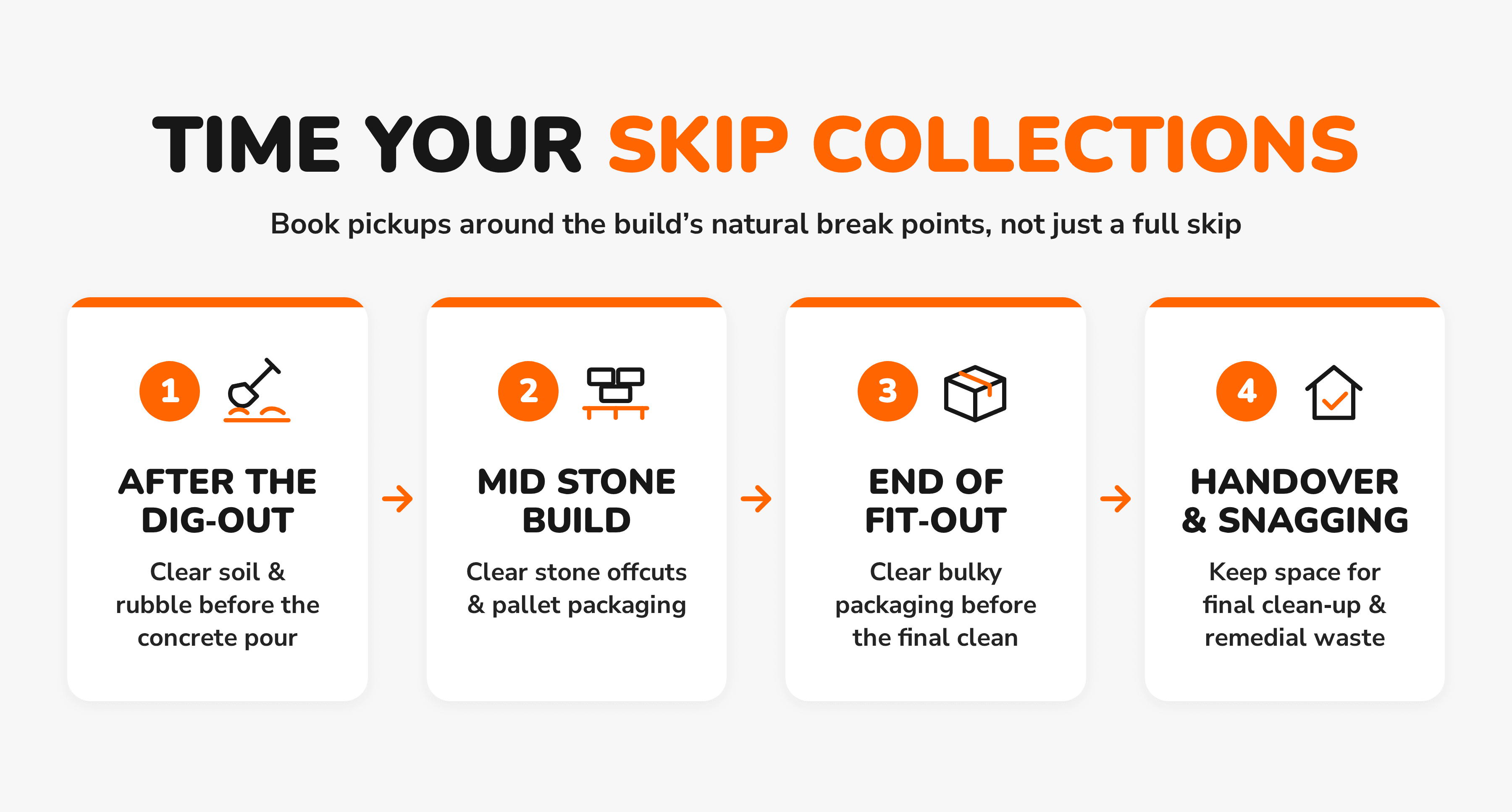
Skip collection timing can make or break your project schedule. I learned to coordinate collections with major waste-generating activities rather than just ordering pickup when the skip gets full. This approach reduces the total number of skips needed and ensures you always have capacity available when high-waste activities are planned.
For Yorkshire stone extensions, I typically schedule collections at three key points:
After foundation excavation and before concrete pour, when soil and demolition waste has been cleared
Midway through the stone installation, when cutting waste and packaging materials have accumulated substantially
At the end of internal fit-out, before final cleaning and landscaping
After project completion, for final cleanup and any remaining materials
During the snagging phase, if remedial work generates additional waste
This schedule aligns with natural break points in the construction sequence and ensures the site stays manageable throughout the project. It also gives you flexibility to adjust timing based on weather delays or material delivery schedules.
Final Phase and Handover Waste
The final weeks of any extension project generate different types of waste from the main construction phase. Snagging work produces small volumes of various materials as minor defects get corrected. Landscaping around the completed extension creates soil and plant waste. Final cleaning generates packaging waste from cleaning supplies and protective materials.
I always keep some skip capacity reserved for this final phase. It's tempting to pack the last skip completely full before the main construction work finishes, but you'll invariably need disposal capacity for odds and ends during handover preparation. A half-empty skip during the final two weeks is better than having to order an additional small skip for cleanup waste.
The handover inspection often reveals small items that need disposal. Leftover paint tins, cleaning materials, damaged tools, and protective equipment all need proper disposal. Some materials, like paint and solvents, can't go in general construction waste skips and need separate hazardous waste collection.
I've found that easyskip.uk handles the coordination well when you need consistent service throughout a project timeline, though any reliable local supplier can work if you establish the relationship early and communicate your schedule clearly.
Check your local council's requirements for highway skip permits if your project site doesn't have off-road space for skip placement. Leeds City Council requires permits for skips on public roads, and the application process takes 5 working days once you submit the correct documentation and fee.