


Skip Hire UK: How to Compare Quotes Like a Trade Buyer
David Doe• 11.11.2026

The line items that separate amateur quotes from professional breakdowns
I was standing in a client's driveway in Harrogate on a Tuesday morning in September, watching her face change as she read through three skip hire UK quotes I'd helped her collect. The numbers looked wildly different, and she couldn't work out why one was £180 while another came in at £340 for what seemed like the same 8-yard skip.
That's when I realised most people read skip quotes the way they'd scan a restaurant menu. They look at the total, maybe glance at the skip size, and make their choice based on the headline figure.
But after fifteen years fitting kitchens and bathrooms across North Yorkshire, I've learned to read these documents like a quantity surveyor reads a building estimate. Every line matters, and the companies that break everything down properly are usually the ones you want to work with. When clients ask me to help them compare skip sizes and prices , I always start with the same question: what exactly are you paying for?
The hire period that nobody explains clearly
Most quotes I see list "2 weeks hire" or "14 days included" somewhere near the top. Sounds straightforward enough.
The problem is what happens on day 15. Some companies charge £8 per day after that, others hit you with £15, and a few I've encountered in the Dales charge a flat £25 for any part of a third week. I learned this the hard way on a bathroom job in Knaresborough back in 2019, when what should have been a £160 skip ended up costing £235 because the tiles arrived three days late and pushed us over the fortnight.
Now I always check two things: - The exact hire period in calendar days - The daily rate for extensions, and whether they charge for partial days
The best quotes spell this out without you having to ask. The dodgy ones bury it in small print or don't mention it at all.
Weight allowances and the tonnage game
Here's where skip hire quote comparison gets interesting. That 8-yard skip might come with a 4-tonne weight limit from one company and a 6-tonne limit from another. The difference matters more than you'd think.
I once filled a skip with old cast iron radiators and Victorian floor tiles during a house renovation in Ripon. The skip looked half empty, but we'd already hit 5.2 tonnes. The company charged us an extra £45 for the overage, calculated at £18 per additional tonne above their 4-tonne limit.
Different waste types have wildly different densities. Soil and rubble will max out your weight allowance long before the skip looks full. Timber and plasterboard (which must go separately anyway) are much lighter for their volume.
The smart move is asking what your actual waste weighs before you book. Most experienced skip companies can give you a decent estimate based on your description.
Permit costs and the council postcode lottery
If your skip needs to sit on the road, you'll need a highway permit. The costs vary dramatically between councils, and not all skip hire quote comparison handle this the same way.
Harrogate Borough Council charges £32.50 for a standard 7-day permit. Drive twenty minutes south to Leeds, and the same permit costs £56.70. Some companies include this in their quote automatically, others add it as a separate line item, and a few don't mention it until you're booking.
The permit process takes different amounts of time too: - Some councils issue permits within 2 working days - Others need a full week's notice - Bank holidays can add another 3-4 days to the wait
I always ask upfront whether the company handles the permit application themselves or expects me to sort it. The ones that manage it for you usually add a small admin fee, but it's worth paying to avoid the paperwork.
The restricted waste surcharges
Most people don't realise that certain materials cost extra to dispose of. Plasterboard can't go in a mixed waste skip and needs separate collection, usually adding £60-80 to your bill. Mattresses, tyres, and electrical items all carry surcharges too.
The really annoying part is when companies don't explain this properly in their quotes. You think you're paying £195 for a skip, then discover your kitchen renovation waste includes a couple of sheets of plasterboard from the ceiling repairs, and suddenly there's an extra charge you weren't expecting.
Good companies list the common restricted items and their additional costs right in the quote. The less helpful ones wait until collection day to point out what can't go in the skip.
Delivery and collection windows
Time is money on any building project, and skip hire quote comparison can escalate quickly if the logistics go wrong. Most companies offer morning or afternoon delivery slots, but the specifics vary wildly.
I've worked with firms that guarantee 2-hour windows and others that just say "sometime Wednesday". The difference matters when you've got trades booked and materials being delivered. Missing your slot can push everything back by days.
Some companies charge extra for timed deliveries or Saturday collections. Others include it in their standard service. It's worth asking about their typical delivery windows and what happens if they're running late.
The invoice breakdown that tells you everything
A detailed line-by-line skip hire invoice reveals more about a company than their website ever will. The professional operators break down skip hire, delivery, permit costs, disposal charges, and VAT as separate items. You can see exactly where your money goes.
The companies that just show a lump sum total? They're usually hiding something, whether it's inflated margins or surprise charges they'll spring on you later.
Hidden charges and how to spot them
The factors that inflate your quote often lurk in the terms and conditions rather than the main pricing. Contamination charges, early collection fees, and damage deposits all add to your final bill if you're not careful.
I once had a skip company try to charge me £85 for "concrete contamination" in what they called a general waste skip. The concrete was listed as acceptable on their website, but apparently only in "small quantities". Nobody had defined what small meant until collection day.
Reading the fine print isn't fun, but it's the only way to avoid these surprises. Look for: - Contamination charges and what triggers them - Damage deposits and when they're refunded - Cancellation policies and associated fees - Weight limit penalties and how they're calculated - Access requirements and additional charges for difficult locations
Comparing like with like across providers
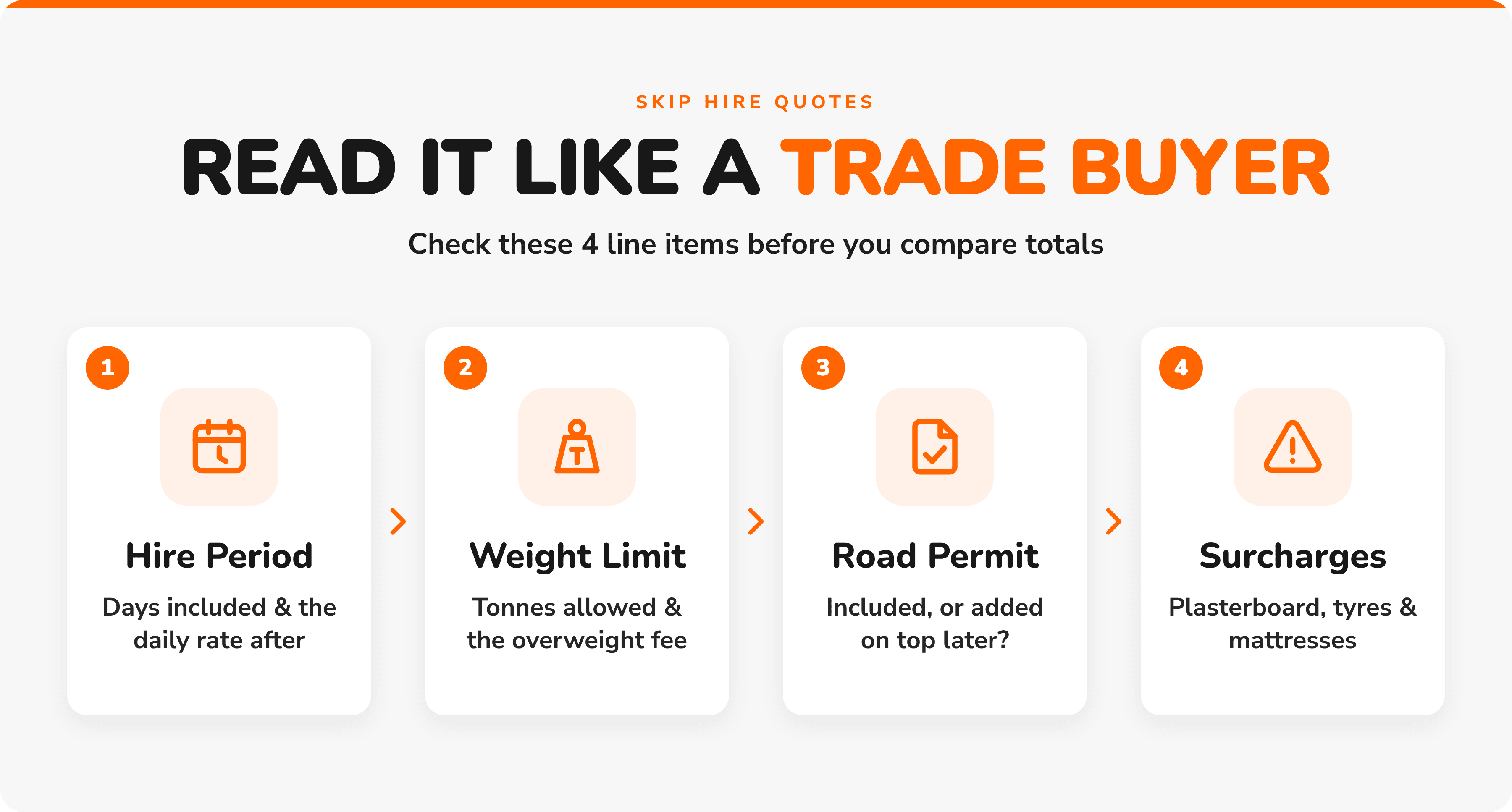
Once you understand what goes into skip hire prices UK UK, you can build a proper comparison. I use a simple spreadsheet with columns for each cost component, then add them up to get the true total for each company.
The cheapest headline price rarely wins once you factor in all the extras. That £180 quote from Harrogate turned out to be £267 once we added the permit, extended hire, and plasterboard disposal. The £340 quote included everything upfront and actually saved money.
Some of the online platforms like easyskip.uk make this easier by standardising how quotes are presented, but you still need to read the details carefully.
Check whether quotes are comparing the same skip sizes too. A 6-yard skip from one company might be the same physical size as an 8-yard skip from another. The cubic yard measurements aren't standardised across the industry, which makes direct comparisons tricky.
Next time you're collecting quotes, ask each company to email you their terms and conditions alongside the pricing. The ones that refuse or make excuses probably aren't worth your time.