


Skip Hire UK: Digital Waste Tracking Is Coming
Sarah Baker• 11.11.2026

What homeowners, builders and skip firms need to know about the new digital waste transfer system
I was sorting through a stack of soggy paper waste transfer notes on a Tuesday morning in March when my phone rang. The caller wanted to know if I could prove where seventeen bags of kitchen tiles had ended up after leaving his Waltham Abbey driveway six weeks earlier. The paper trail had dissolved into an illegible mess, and I found myself scrambling through filing cabinets at 8:47am trying to piece together a chain of custody that should have been straightforward.
That mess taught me something important about digital waste tracking UK systems. We're not just talking about convenience here. When the new digital tracking requirements come into force, they'll change how every skip hire works, from the moment you book one to the final disposal receipt.
The government has been piloting digital waste transfer notes since late 2023, and the full rollout isn't far behind. For anyone using skip hire UK services, this means your next skip could come with a completely different paper trail. Some firms are already testing the new systems, while others are still figuring out what compliance will cost them.
The Current Paper Problem
Right now, every skip load generates at least three paper documents. You get a booking confirmation, the driver hands over a waste transfer note when the skip arrives, and somewhere down the line there's a disposal certificate that proves your waste reached a licensed facility.
I've watched this system fail in predictable ways. Rain turns documents into pulp. Wind blows them into hedges. Drivers forget to hand them over, or customers lose them before the skip gets collected. Last autumn, I spent an entire Thursday afternoon helping a builder in Kettering reconstruct his waste disposal records after his site office flooded during Storm Babet.
The bigger problem is traceability. When enforcement officers ask to see your waste transfer notes, you need to prove a continuous chain from your property to final disposal. Paper systems make that harder than it should be, especially when multiple parties handle the same waste load.
How Digital Tracking Changes Everything
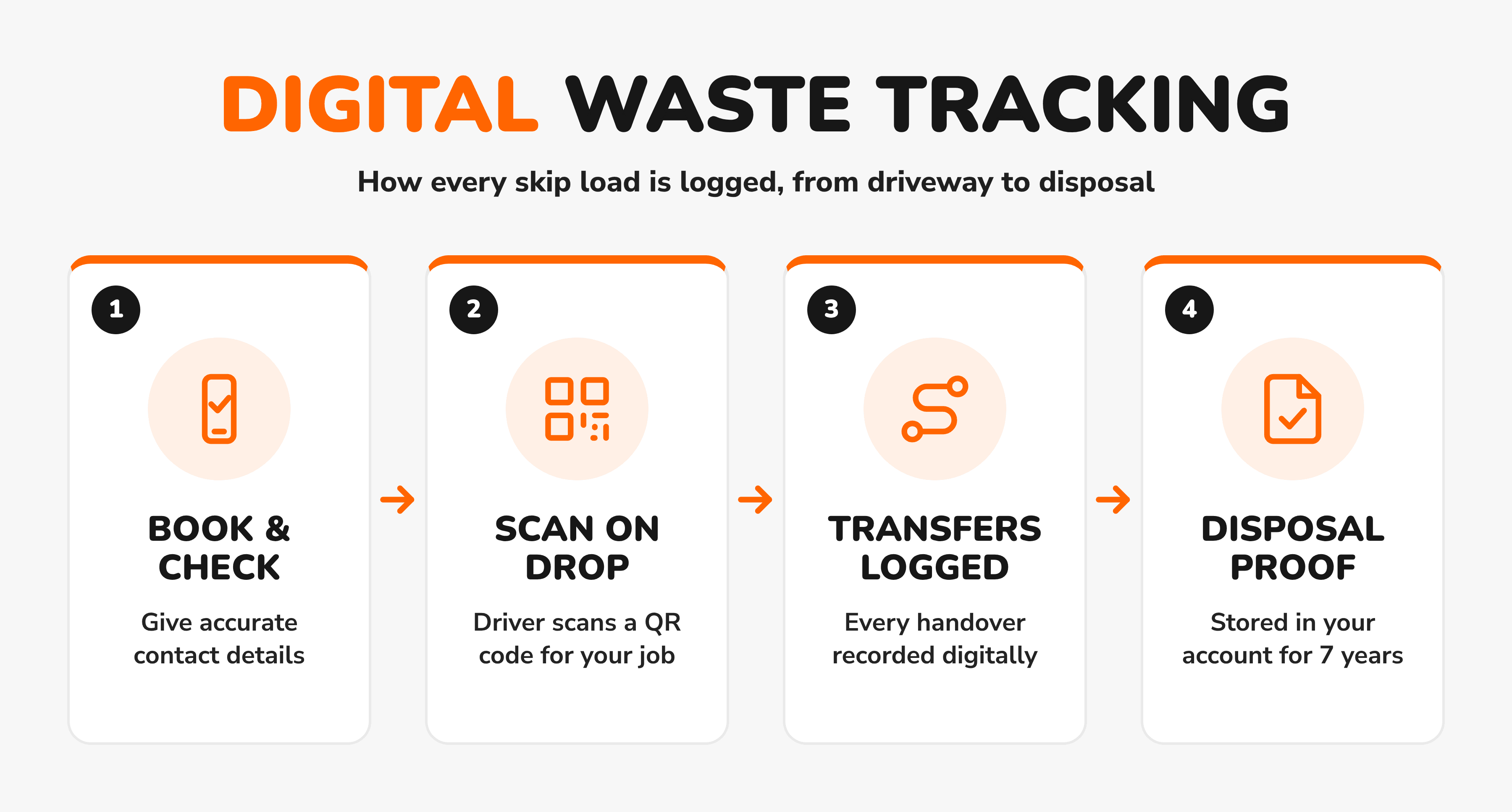
The new digital system replaces physical paperwork with electronic records that follow your waste automatically. When a skip gets delivered, the driver scans a QR code that links to your job. Every transfer point gets logged digitally, and disposal certificates appear in your account without you chasing anyone for copies.
For homeowners, this should mean fewer lost documents and clearer records if you need them later. The system will store your waste disposal history for seven years, which matters if you're selling a property or dealing with regulatory queries about past renovation work.
Builders get more detailed tracking data, which helps with skip hire compliance across multiple sites. Instead of managing dozens of paper receipts, site managers can access all their waste records through one digital dashboard.
What Skip Firms Are Actually Doing
The transition isn't happening uniformly across the industry. Some companies I work with have already invested in tablet systems for their drivers and integrated digital tracking into their existing software. Others are waiting to see exactly what the final regulations will require before committing to new technology.
The cost varies dramatically depending on fleet size and existing systems. One local firm told me their digital upgrade cost £8,400 for nineteen vehicles, while a larger operator quoted £23,000 for a more comprehensive system that handles everything from booking to final disposal tracking.
Training drivers represents another challenge I hadn't anticipated. The older hands who've been delivering skips for decades need time to adapt to tablets and scanning systems. I watched one experienced driver struggle for twelve minutes trying to upload photos of a delivery location because the app interface confused him.
New Responsibilities for Customers
Digital tracking creates fresh obligations for everyone who hires skips. You'll need to provide accurate contact details and maintain access to the platform where your records get stored. Some systems require customers to confirm delivery and collection details through smartphone apps.
The question of who's responsible when digital systems fail hasn't been fully resolved yet. If the skip firm's app crashes and your waste transfer notes don't get properly logged, the legal responsibility for proving compliance might still fall on you as the waste producer.
Keep backup screenshots of key documents during the transition period
Verify your contact details are correct when booking
I've started advising customers to screenshot their digital receipts as soon as they appear, at least until we know how reliable these new systems prove to be under pressure.
Regional Variations in Implementation
Not every area will switch to digital waste tracking UK systems at the same time. The Environment Agency is rolling out requirements in phases, starting with larger urban areas where enforcement resources are concentrated.
Rural areas might see delays because internet connectivity affects how well the tracking systems work in practice. I know of skip yards in remote parts of Devon where mobile signal strength makes real-time uploads difficult during collection rounds.
Some councils are also implementing their own additional requirements on top of the national digital standards. Birmingham City Council, for example, wants photographic evidence of every commercial skip delivery, while neighbouring Solihull accepts standard digital receipts without visual proof.
Compliance Costs and Who Pays
The obvious question is whether skip hire UK prices will rise to cover digital infrastructure costs. Most firms I've spoken to expect some price increases, but they're trying to absorb the costs rather than pass them directly to customers.
Technology expenses include more than just the initial software purchase. There are ongoing subscription fees, device replacement costs when tablets get damaged, and additional staff training time. One family-run business in Macclesfield calculated their annual digital compliance costs at £2,180, which works out to roughly £3.40 per skip hire over their typical volume.
Software licensing typically costs £150-400 per vehicle annually Tablet replacements average £290 each when accounting for job site damage Driver training adds approximately 4.5 hours per employee
What This Means for Different Waste Types
Digital tracking will particularly affect how hazardous materials get handled during skip hires. The new systems are designed to flag problematic waste types automatically, which should reduce the number of skips that get rejected at disposal facilities because they contain banned materials.
For anyone dealing with construction waste, the digital trail will make it easier to prove compliance with regulations about separating POPs, WEEE and plasterboard from general building rubble. The system can track whether your waste went to appropriate specialist facilities rather than standard landfill sites.
Garden waste and household clearances should see fewer complications, though you'll still need digital proof that organic materials reached composting facilities if local regulations require it. The electronic records make it simpler to demonstrate you've met recycling requirements where they apply.
Preparing for the Change
Most skip hire compliance responsibilities will shift automatically to digital formats without requiring action from customers. However, businesses that regularly hire skips should start organizing their current paper records now, since you might need to reference older waste transfers during the transition period.
The timing of the full rollout remains somewhat uncertain, partly because of ongoing technical testing and partly because skip firms and new waste regulations are creating implementation challenges that weren't fully anticipated during the planning phase. Some operators like easyskip.uk are already offering early access to digital tracking for customers who want to try the new systems before they become mandatory. This preview period lets you understand how the technology works without the pressure of regulatory deadlines.
Check with your usual skip hire provider about their digital transition timeline. The companies that adapt earliest will likely offer smoother service during the changeover period, while late adopters might face compliance scrambles that could affect availability and pricing in the short term.