


Skip Hire UK Gets Harder as New Rules Ban Mixed Business Waste
• 10.11.2026

Why the end of mixed trade skips means extra costs and planning for every workplace
I was loading timber offcuts into a 6-yard skip outside a converted mill in Dewsbury one Tuesday morning in October when my phone rang. The caller wanted to know if he could still chuck his office furniture in with the construction debris from his shop refit. I'd been dreading that conversation for months.
The answer was no, and it's getting more complicated by the week. The new Simpler Recycling workplaces rules that rolled out across England this year have turned what used to be straightforward skip hire UK jobs into a logistical puzzle. What businesses could throw together in one skip for decades now needs separating, labelling, and often multiple collections.
I've been managing site clearances around West Yorkshire for eight years, and the shift has caught most of my commercial clients off guard. The trade skip hire they're used to ordering simply doesn't work the same way anymore. Mixed waste that once went straight to energy recovery now gets rejected at the gate, and contamination fees start at £180 per load.
What Changed With Simpler Recycling Rules
The Environment Act 2021 finally kicked in properly this year, and it's reshaping how every business handles waste. The old system let you mix most non-hazardous materials in one skip, provided you had the right waste transfer notes. Now you need separate collections for different waste streams.
I watched this play out at a joinery workshop in Batley last month. The owner had always filled his fortnightly 8-yard skip with wood shavings, broken pallets, cardboard packaging, and the occasional piece of damaged furniture. Under the new rules, that wood waste needs its own collection, the cardboard goes separately, and anything with fabric or foam cushioning counts as a different waste type entirely.
The driver who'd been collecting from that site for three years had to leave half the skip behind. The contamination fee alone cost the business £220, and they needed to arrange two additional collections to clear what remained.
Office Waste That Can No Longer Mix
Office clearances have become particularly tricky. Paper, cardboard, and plastic packaging all need separating now, even though they used to go together in general waste skips. Electronic equipment was always separate, but now even the packaging it came in has its own requirements.
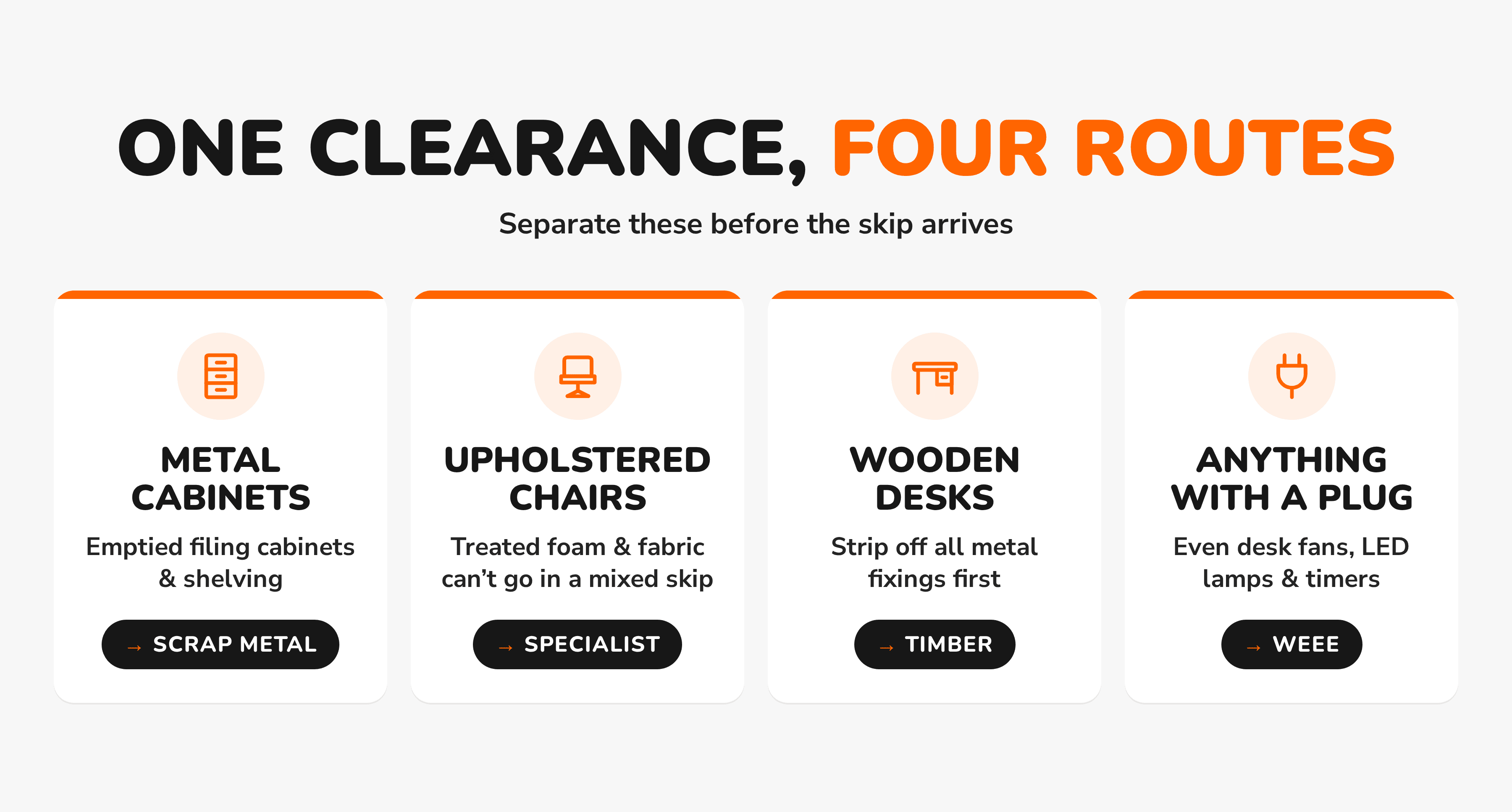
Last week I cleared a dental practice in Morley that was relocating. The reception furniture, patient chairs, and old filing cabinets all needed different disposal routes:
Metal filing cabinets went for scrap metal recovery
Upholstered chairs required specialist furniture waste collection due to fire retardant regulations
Wooden reception desk could join construction timber, but only after removing all metal fixtures
The practice manager had budgeted £340 for one skip collection. The final bill came to £580 across four separate collections, plus £45 in additional permit fees because we needed the containers on the road for longer.
Construction and Demolition Restrictions
Building site waste rules have tightened considerably under business waste segregation requirements. Concrete, brick, and hardcore still go together, but anything with wood, metal, or plastic contamination gets rejected. I've seen loads turned away for having a single piece of treated timber mixed with clean hardcore.
Plasterboard was always problematic because of hydrogen sulphide risks, but now even small amounts trigger automatic rejection. A house renovation in Ossett last month had their 12-yard skip refused because someone had thrown in three offcuts of plasterboard amongst the general rubble. The additional collection and re-sorting cost them £195.
Food and Packaging Waste Separation
Retail and hospitality businesses face some of the biggest changes. Food waste was always separate, but now all the packaging materials need their own streams too. A bakery in Heckmondwike that I work with regularly used to put flour bags, cardboard boxes, and damaged display equipment in the same container.
Their weekly collection now involves three separate bins. The plastic flour bags go to specialist recycling, cardboard gets its own collection, and the metal display stands need scrap processing. Their waste disposal costs have risen from £140 per month to £265, but they're avoiding the contamination penalties that hit their neighbour down the street.
Textile and Upholstery Challenges
Furniture disposal has become one of the most expensive categories under the new system. Office chairs, sofas, curtains, and carpeting all have different fire retardant treatments, which means they can't mix with general waste streams. The regulations around foam and fabric disposal have created a bottleneck that's driving up collection costs.
I cleared a hotel refurbishment in Mirfield where they were replacing 47 rooms of furniture. Under the old system, most of it would have gone in large skips with other refurbishment waste. Now each material type needed separate handling:
Mattresses required specialist disposal due to fire retardant content
Wooden bed frames went to furniture recycling after metal removal
Synthetic carpets needed textile-specific processing
Curtains and bedding went to textile recycling
Metal bed hardware joined the scrap stream
What started as a £890 clearance quote ended up costing £1,340 because of the additional sorting and specialist collections required.
Electronics and WEEE Compliance
Electronic waste rules were already strict, but the new segregation requirements have made mixed office clearances almost impossible. Computers, printers, phones, and even desk lamps with electronic components all need separate WEEE-compliant disposal routes.
The tricky part isn't the obvious electronics, it's the items that contain small electronic components. LED light fittings, electronic door locks, digital thermostats, and automated window blinds all fall under WEEE regulations now. A single contaminated item can result in an entire skip load being rejected.
I learned this the expensive way during an office clearance in Dewsbury town centre. A seemingly innocent desk fan with an electronic timer contaminated a 6-yard skip full of furniture. The rejection fee was £180, and we needed a separate WEEE collection that cost another £95 for what amounted to one small appliance.
Cost Planning and Documentation
The paperwork requirements have multiplied alongside the physical separation needs. Every waste stream needs its own transfer note, and mixing categories on documentation can trigger Environment Agency investigations. I've started keeping separate clipboards for each type of material we collect, because the administrative burden has become substantial.
Businesses need to factor in these additional costs when planning any clearance or renovation work. A typical office refit that might have cost £450 in skip hire UK fees now averages around £720 once you account for the multiple collections required. Construction projects see similar increases, particularly if they involve any mixed materials.
The guidance around what can and cannot go in a skip changes regularly as waste processors adapt their facilities to the new requirements. What was acceptable six months ago might trigger rejection fees today, and keeping up with the changes requires constant communication with your waste contractor.
Working With New Restrictions
The most successful businesses I work with have adapted by planning waste streams from the start of any project. Instead of ordering one large skip and hoping for the best, they calculate exactly what materials they'll generate and arrange appropriate collections in advance.
Some companies have found savings by timing their waste production better. A furniture retailer in Batley now schedules all their packaging disposal for the same day each week, which lets them fill larger containers more efficiently. Their monthly waste costs actually decreased slightly, even though they're using more collection services. The detailed requirements are still evolving, and keeping track of what's permitted requires checking current guidance regularly. The comprehensive 2026 guide to prohibited skip items gets updated as processors change their acceptance criteria, because the industry is still adapting to the new rules.
Companies like easyskip.uk have started offering segregated collection planning services to help businesses navigate the complexity, though the fundamental challenge remains the same. What used to be one decision has become five or six separate waste management choices, each with its own costs and compliance requirements.
Check with your current waste contractor about their segregation services this week, because the rules are only getting stricter. The contamination fees I'm seeing suggest that getting ahead of these requirements will save money compared to discovering them during an urgent clearance job.