


Skip Hire in Winter: Why the Clocks Going Back Changes Everything
Sarah Baker• 10.11.2026

From frost damage to lighting rules, winter brings challenges that catch most people off guard
I was loading a van with kitchen units on a Tuesday morning in November 2019 when the homeowner asked me about getting a skip delivered that afternoon. The sun was already low at half past nine, frost still clung to the van's windscreen, and I knew she hadn't thought this through properly.
Most people don't realise how much winter changes the game for waste removal. They book skips the same way they do in July, expecting the same quick turnaround and straightforward collection process.
But winter skip hire needs different planning, and the clocks going back in late October marks the point where those differences start to bite hard.
The Frost Problem Nobody Talks About
Frozen waste sticks to skip walls like cement. I've seen drivers spend twenty minutes with crowbars trying to tip a 6-yard skip that should empty in seconds, all because nobody warned the customer about covering their waste overnight.
The worst job I handled was a house clearance in Harrogate during February 2021. The skip had sat there for five days through a cold snap, and when our driver tilted it at the yard, half the contents stayed welded to the bottom by ice. We had to leave it in the heated workshop for three hours before we could finish emptying it.
Wet materials freeze solid against metal. Old carpets, garden waste with morning dew still on it, anything damp from a bathroom renovation. Once it's frozen, it won't shift until it thaws completely.
Why Daylight Hours Matter More Than You Think
December gives you eight hours of proper working light. That's it. Skip companies usually deliver between 7am and 6pm, but in deep winter, useful daylight runs from about half past eight until four o'clock. After that, you're working by streetlights or setting up your own illumination, which slows everything down and makes it harder to sort waste properly.
I learned this the expensive way during a loft conversion project in Stamford. We'd booked the skip for a Saturday delivery in early December, planning to load it over the weekend. But working by torchlight on Sunday evening, we mixed general waste with timber that could have gone to recycling. The whole load went to landfill because we couldn't see well enough to separate materials properly.
Skip Lighting Rules Get Serious in Winter
Once the clocks go back, skip lighting rules become your daily reality instead of an occasional concern. Any skip on the road needs proper lighting from sunset to sunrise, and sunset comes early between November and February.
The night-time skip lighting rules require specific equipment. Four reflective cones during darkness, positioned at each corner, plus lamps if the skip will stay overnight. Most councils won't issue highway permits without proof you understand these requirements.
I've seen three different penalty notices issued on the same street in Leicester because residents thought battery-powered bike lights would satisfy the regulations. They don't. You need proper reflective markers that meet British Standards, and someone needs to check them every evening.
Booking Before October Changes Everything
Smart skip booking tips for winter start with understanding how the calendar works against you. Book your skip for delivery in September or early October, and you can usually get same-day or next-day service. Wait until November, and most companies are juggling reduced daylight hours with increased demand from people rushing to finish outdoor projects.
The pattern repeats every year. September stays quiet because people think they have plenty of time. October brings a surge as the reality hits home. November becomes a scramble, and December is mostly emergency jobs and new year clearouts.
That Harrogate job I mentioned earlier? The customer had originally wanted the skip in October but delayed booking until the weather forecast looked grim. By then, our next available delivery slot was four days out, and those four days included the first hard frost of winter.
Weather Delays and Collection Problems
Snow stops everything, but ice is worse because it's less obvious. A skip that looks fine from the road might be sitting in a driveway that's become a skating rink, making it impossible for the lorry to get close enough for collection.
I remember one job in the Pennines where we had to wait eleven days for collection because of black ice on the customer's steep drive. The skip was full and ready to go, but our driver couldn't risk reversing a 26-tonne lorry down a slope that was lethal even on foot. We had to wait for a sustained thaw, which didn't come until nearly February.
The Cost of Winter Delays
Extended hire periods cost more than most people budget for. A standard 8-yard skip might rent for £180 for two weeks, but if weather delays stretch that to four weeks, you're looking at additional charges that can push the total past £280.
Insurance becomes an issue too. Skip companies carry public liability cover, but if your skip sits on the highway for weeks longer than planned because of weather delays, some councils want additional documentation. I've seen customers face permit renewal fees of £45 for extensions they never requested.
Materials That Don't Mix Well with Cold
Plasterboard and cold weather make a terrible combination. Moisture from frost makes it heavier and more likely to break apart during lifting, creating dust and sharp fragments. Paint tins can split when water inside them freezes and expands.
Winter skip hire UK regulations get stricter about hazardous materials during cold months, partly because containers fail more easily. I've had to reject loads where anti-freeze or other chemicals had leaked from split containers and contaminated everything else in the skip.
Paint and chemicals in metal containers are most at risk from freeze damage
Wet concrete or mortar becomes impossible to remove once frozen
Garden waste stays soggy longer and weighs significantly more than expected
Timber with frost damage splinters more easily and creates handling problems
Asbestos becomes more dangerous to handle when wet materials freeze around it
Planning Around Holiday Periods
Christmas and New Year create the biggest service gaps of the year. Most skip companies shut down completely between December 23rd and January 2nd, leaving a ten-day window where emergency collections become impossible.
The smart approach involves avoiding holiday delivery gaps by booking well ahead and confirming your collection date falls before the shutdown period. I've seen too many skips sit full and immovable for nearly two weeks because someone assumed normal service would continue through the holidays.
Easter creates similar problems, but the dates move around enough that most people don't plan for them. Bank holidays in May catch people out because they coincide with the start of garden clearance season, when demand peaks anyway.
Companies like easyskip.uk usually publish their holiday schedules by October, which gives you time to plan around them properly. The key is checking those dates when you first consider booking, not when you're ready to fill the skip.
What Actually Works in Winter
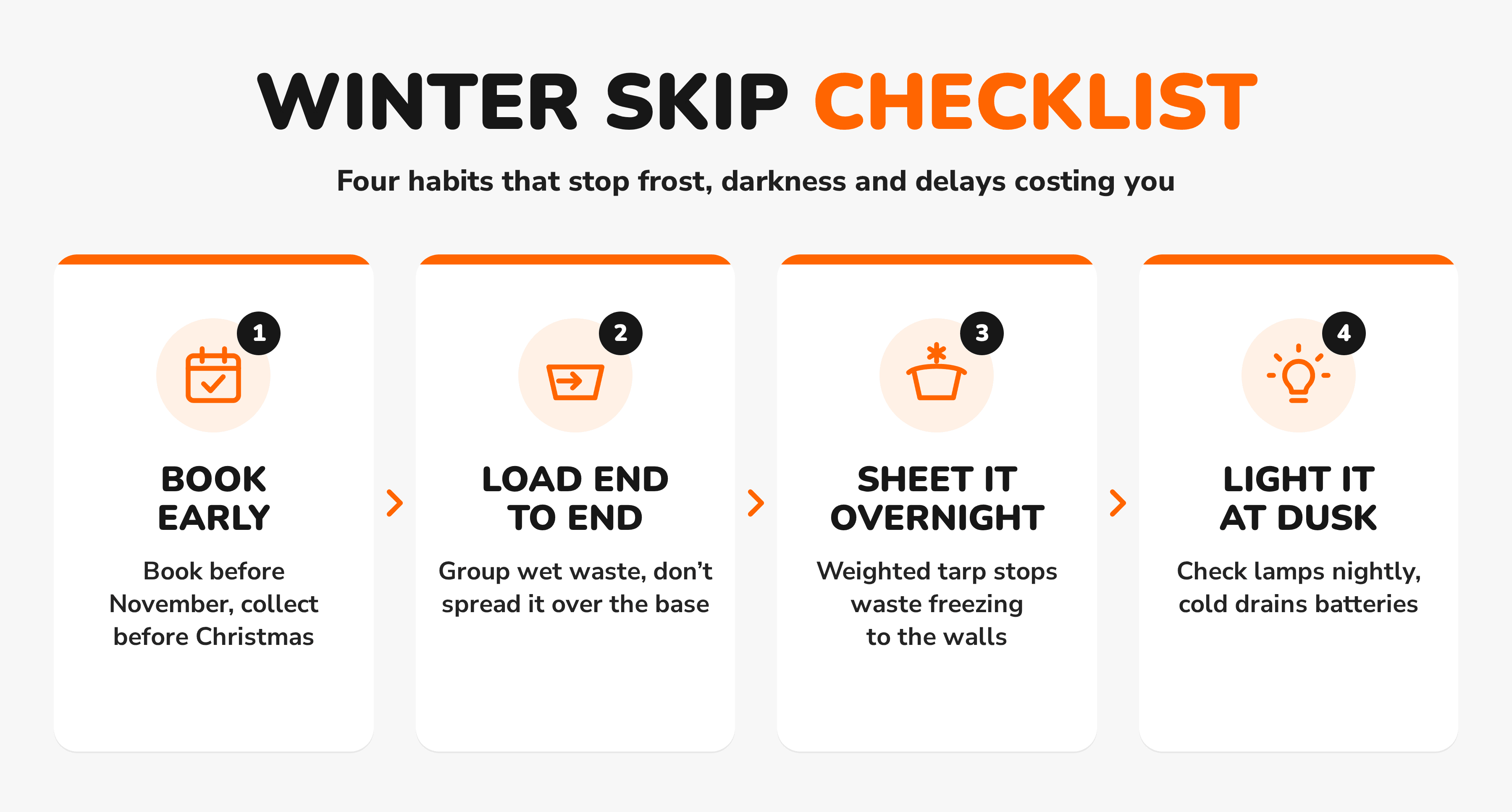
Cover everything overnight, even if the forecast looks clear. A tarpaulin costs £25 and prevents thousands of pounds of delay costs when unexpected frost hits. Weight it down properly because winter winds are stronger and more unpredictable than summer breezes.
Start filling your skip from one end and work systematically toward the other. This keeps frozen materials grouped together if the worst happens, making collection easier. Don't spread wet waste evenly across the bottom, because it freezes into an unbreakable sheet.
Check your lighting setup every evening before dark, not when you remember at bedtime. Batteries die faster in cold weather, and councils notice unlit skips more readily during the long winter nights when they're visible for fifteen hours out of every twenty-four.