


Skip Hire Manchester: Red-Brick Terrace Kitchen Refits
David Doe• 02.11.2026

Why South Manchester's Victorian kitchens need careful waste planning
I'd just finished stripping the kitchen out of a 1890s terrace in Levenshulme when the homeowner asked me something I should have seen coming. "Where's all this going to go?" She gestured at the pile of units, worktops, tiles and chunks of old plasterboard that now filled her back room. It was a Tuesday morning in March 2019, and I'd been fitting kitchens across south Manchester for eleven years, but I still hadn't learned to have this conversation before we started pulling things apart.
The old kitchen had come out easier than expected, which should have been my first warning. When Victorian builders put kitchens into these red-brick terraces, they built them to last, but this one had been updated sometime in the 1970s with hardboard backing and cheap chipboard units. Everything crumbled as we worked, leaving us with twice the volume of waste I'd planned for.
That's when I learned that 8 yard skip hire Manchester bookings need to happen before you touch the first screw, not after you've filled someone's living room with debris. The couple had already moved their sofa and dining table upstairs to make room for the new units to arrive on Friday. Now we had a house full of old kitchen waste and nowhere to put it.
Planning waste removal before the first cabinet comes out
Every kitchen refit in these south Manchester terraces throws up the same challenge. The houses look similar from the street, all red brick and bay windows, but inside they're completely different. I've worked on Chorlton kitchens where the previous owners had knocked through to create open-plan spaces, and others where you can barely fit a wheelie bin down the side return.
The waste always surprises people. A standard galley kitchen in a Didsbury terrace typically generates about 3.2 tonnes of material when you include the old units, worktops, wall tiles, floor tiles and ceiling plasterboard. That's more than most people expect, and it doesn't all come out at once.
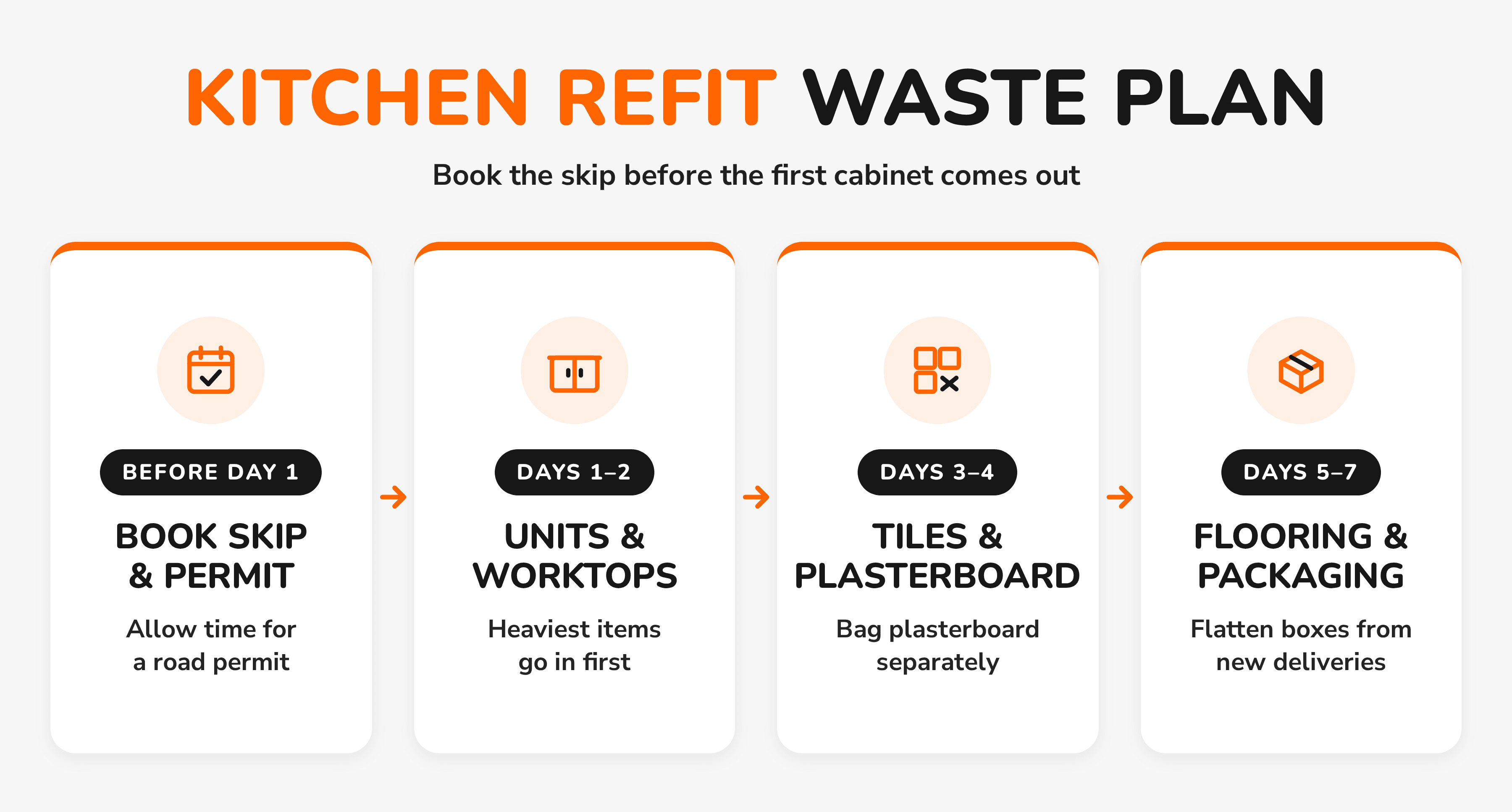
I learned to book skips for a minimum of seven days after that Levenshulme job. Here's what typically comes out day by day:
Days 1-2: Base units and appliances (heaviest items first)
Days 3-4: Wall tiles, splashbacks and plasterboard sections
Days 5-7: Flooring, final cleanup and packaging from new deliveries
The timing matters because these narrow terraced streets fill up fast. I've seen skips delivered on a Monday morning and completely full by Wednesday afternoon, not just with kitchen waste but with whatever the neighbours decide to add.
Why 8 yard skips work best for terraced house kitchens
The dimensions of these Manchester terraces dictate everything about waste removal. Most of the streets were built between 1880 and 1910, when nobody planned for cars, let alone skip lorries. The roads are narrow, parking is tight, and many houses have small front gardens with low walls that complicate access.
An 8 yard skip measures roughly 12 feet by 6 feet, which fits into most front gardens or parking spaces without blocking the pavement completely. I've tried smaller 6 yard skips, but they fill up too quickly when you're dealing with old chipboard units that break into awkward chunks. Larger skips often won't fit, or they block access for other trades working in the area.
The weight limit matters more than the volume in these jobs. Kitchen waste is dense. Old ceramic floor tiles, cast iron sinks, and thick plasterboard add up quickly, and skip hire companies in Manchester typically allow about 8 tonnes in an 8 yard skip before charging extra.
Plasterboard disposal rules that catch people out
The biggest surprise for most homeowners is what happens with plasterboard waste. You can't just throw it in with everything else, and this rule trips up even experienced contractors who should know better. I watched a kitchen fitter in Chorlton get landed with an extra £180 charge because he'd mixed plasterboard chunks in with his general building waste.
Most Manchester kitchen refit waste includes plasterboard from walls behind old units, ceiling sections where lighting has been moved, and sometimes whole walls that have been replastered. The Environment Agency classified gypsum waste as hazardous when it breaks down in landfill, which means it needs separate collection and processing.
This affects skip hire in two ways. Some companies won't take mixed loads with plasterboard at all. Others will take it but charge a separation fee that can add 40% to your bill. I now budget for this as a separate line item on every quote, and I make sure clients understand the plasterboard rules for kitchen refits before we start pulling walls apart.
The practical solution is usually to bag plasterboard separately as you work. Heavy-duty rubble sacks cost about £4 each and hold roughly one square metre of broken plasterboard. A typical kitchen refit generates between 8 and 14 bags, depending on how much wall work is involved.
Different approaches across Chorlton, Levenshulme and Didsbury
The three areas handle residential skip permits differently, even though they're all part of Manchester City Council. Chorlton tends to be more flexible about short-term permits for renovation work, probably because the council recognises how many of these Victorian houses are being updated by young families moving into the area.
Levenshulme is stricter about skip positioning and timing. The main roads get busy with commuter traffic, and residents have complained about skips blocking sight lines at junctions. I've had permits refused for Albert Road and Stockport Road locations that would have been approved automatically in other areas.
Didsbury sits somewhere in the middle, but property values mean neighbours are more likely to complain about skips affecting the street's appearance. I always warn clients that permits can take longer to process in the village area, particularly around the main shopping streets where the council worries about tourist impact.
The permit fees are standard across all three areas at £35 for seven days, but processing times vary from 3 working days in Chorlton to 8 working days in parts of Didsbury. That's why I book permits before finalising start dates with clients.
Managing waste from multiple trades
Kitchen refits in these terraces rarely involve just one trade. Once you start pulling out old units, you usually find electrical work that needs updating, plumbing that doesn't meet current regulations, or walls that need replastering. Each trade generates different types of waste, and mixing them can create disposal problems.
Electricians produce mostly cable offcuts and old consumer units, which are light but bulky. Plumbers generate copper pipe, which is valuable enough that some will take it away themselves, plus chunks of old cast iron that are extremely heavy. Plasterers create the most volume with old wall coverings and skimming waste, but it's relatively light compared to ceramic tiles or stone worktops.
The challenge is coordinating who puts what in the skip and when. I've learned to establish ground rules before different trades start working:
Heavy items go in first (tiles, cast iron, stone)
Plasterboard gets bagged separately regardless of which trade removes it
Packaging from new deliveries shouldn't take up more than 20% of skip space
Electrical waste with copper content stays separate for recycling value
Paint tins and adhesive containers need hazardous waste collection, not skip disposal
Cost breakdown from a recent Didsbury job
Last September, I fitted a kitchen in a 1905 terrace near Didsbury Village that gives a good example of how waste costs add up. The house belonged to a couple downsizing from a larger property in Hale, and they wanted a complete renovation rather than just swapping units.
The job took 9 days from first delivery to final cleanup, and we needed waste removal throughout. Here's what it cost them:
8 yard skip for 10 days: £285 (including permit and delivery)
Plasterboard separation fee: £85 (14 bags of gypsum waste)
Second skip collection when first filled early: £45 (weekend emergency pickup)
The second collection happened because their neighbours started using the skip for garden waste on day 4, despite our polite note asking them not to. By Saturday morning, it was completely full with only half our kitchen waste removed. Weekend collections cost more, but we couldn't wait until Monday with units arriving and nowhere to put the remaining debris.
That job taught me to factor neighbour behaviour into waste planning. Friendly areas like most of Chorlton see more casual skip sharing. Streets with parking pressure, which includes most of Levenshulme, tend to view skips as community resources whether you want them to or not.
Working within Manchester's waste regulations
Manchester City Council updated their waste transfer rules in 2022, which affects how kitchen fitters and homeowners handle renovation debris. The duty of care requirements mean someone has to track where every type of waste ends up, and that responsibility sits with whoever arranges the skip hire.
For kitchen refits, this typically means keeping receipts that show plasterboard went for gypsum recycling, metal components went to scrap dealers, and general building waste went to licensed processing facilities. Most reputable skip hire companies provide this documentation automatically, but some of the cheaper operators don't.
I've seen homeowners get follow-up letters from the council asking for waste transfer documentation months after renovation work finished. It's not common, but it happens often enough that I always recommend using companies that provide proper waste tracking certificates. Services like easyskip.uk handle this paperwork as standard, which saves hassle later.
The regulations also affect what you can put in skips. Electrical items with plugs need WEEE recycling, not general waste disposal. Paint and solvents require hazardous waste collection. Even aerosol cans from cleaning products need separate handling if they're not completely empty.