


Skip Hire Leeds: Beat the Autumn Rush Before Winter Hits
David Doe• 02.11.2026

Why garden clearance gets complicated when the leaves start falling
I was pulling ivy off a back fence in Headingley one Tuesday morning in October 2019 when my client mentioned she'd been trying to book a skip for three weeks. Every company she'd called was either fully booked or quoting delivery dates well into November. The irony wasn't lost on me as I filled my seventh builder's bag with brambles and dead clematis.
That's when I learned the hard way about Leeds' autumn garden rush. Everyone wants their outdoor space sorted before the weather turns, but hardly anyone books early enough.
I've been doing garden landscaping across West Yorkshire for the past eleven years, and I've watched this pattern repeat every single year. The moment the first leaves hit the ground, usually around mid-September, the phone calls start. By the time October arrives properly, skip hire Leeds companies are turning jobs away or pushing delivery dates back by weeks. The sensible contractors book their skips in August.
The September scramble hits every year
September seems like plenty of time to sort your garden before winter. It isn't. I learned this the expensive way on a job in Roundhay back in 2020. The customer wanted their entire back garden redesigned before Christmas, starting with clearing forty-three years' worth of accumulated junk from behind their garage. I promised we'd start in early October and booked a 12-yard skip for the second week of the month. The skip company called me on the Friday before delivery to say they couldn't fit me in until November 18th.
We ended up hiring a van and making seventeen trips to the household waste site on Kirkstall Road. The extra labour and fuel costs ate most of my profit margin, and the client wasn't thrilled about the delay either.
Why Leeds garden clearance demand spikes in autumn
Three things happen simultaneously across Leeds every September, and they all need skips. First, the end-of-summer garden tidy-up begins. People look at six months of growth and realise their hedge has taken over half the drive. Sheds get emptied, patios get power-washed, and suddenly there's a mountain of green waste that won't fit in the brown bin.
Second, the building work that got delayed all summer finally starts. I've seen it dozens of times: families put off the conservatory demolition or the garage conversion until the kids are back at school, then want everything finished before the weather turns. These jobs need bigger skips and longer hire periods.
Third, house moves peak again after the summer holiday lull. Estate agents tell me September and October are their busiest months after spring, which means more house clearances and more competition for available skips.
Green waste creates its own problems
Garden waste isn't just about volume. It's heavy when it's fresh and gets heavier when it rains.
I made this mistake on a job in Horsforth three years ago. We'd filled a 6-yard skip with nothing but hedge clippings and lawn moss on a dry Thursday in September. Friday night brought the first proper autumn downpour. By Monday morning, that skip was so waterlogged the lorry couldn't lift it safely. The driver made me shovel out two builder's bags worth of soggy privet before he'd attempt the collection.
The weight issue matters for pricing too. Most skip hire Leeds companies include a weight allowance in their standard rates, but saturated vegetation can push you over that limit quickly. I've been stung with excess weight charges of £180 on what should have been a straightforward garden clearance.
Mixed loads cause different headaches:
Green waste can't go in skips with general construction rubble
Soil counts as inert waste and needs separate disposal
Treated timber fencing requires different processing from natural wood
Booking windows that actually work
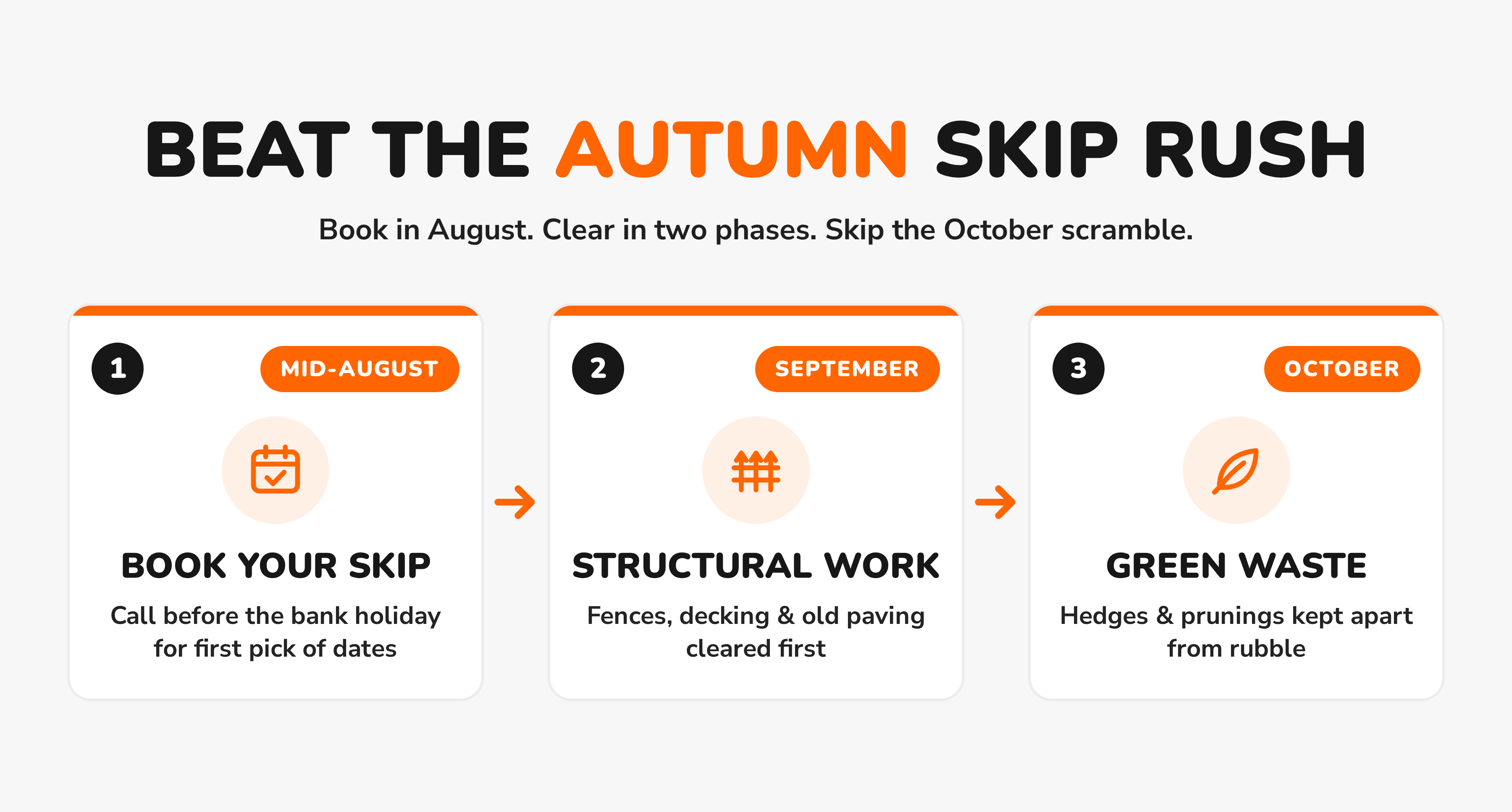
Smart timing means calling skip companies in mid-August, not waiting until you're ready to start work.
I book all my autumn garden waste Leeds skips before the Bank Holiday weekend. That gives me first pick of dates and better pricing. Most companies offer discounts for advance bookings anyway, especially if you can be flexible about delivery days.
For major clearances, I've learned to book multiple smaller skips rather than waiting for one large one to become available. Two 6-yard skips delivered a week apart often cost less than a single 12-yard skip hired for a fortnight, especially when you factor in the weight allowances.
The winter slowdown myth
People assume skip demand drops off completely once November arrives. That's only half true. Domestic garden work does slow down, but commercial construction carries on through winter. The real lull doesn't hit until after Christmas, and by then you're looking at frozen ground and limited working hours. If your garden needs major work, autumn is still your best window.
I've seen plenty of jobs get pushed into spring because clients thought they could wait for better availability. Spring brings its own rush as everyone emerges from winter with ambitious plans and no patience for booking delays.
Planning your clearance strategy
Start with the mess you can see, then add thirty percent for what you'll uncover.
Every garden clearance reveals surprises buried under years of growth. Last month in Bramley, what looked like a simple shrub removal turned into excavating the remains of a concrete shed base and about two tonnes of broken paving slabs. The client had lived there for fifteen years and never knew they existed.
Phased clearances work better than trying to do everything at once. I typically break autumn jobs into two stages: structural work like decking and fence replacement skip timing in September, then the final tidy-up and planting in October. This spreads the skip requirements over two months and reduces the pressure on both availability and budget.
For smaller properties, consider sharing a skip across allotment plots or neighbouring gardens. I've organised several shared hires in Headingley where three or four households split a 12-yard skip for their annual clear-outs. Everyone saves money and the skip gets filled efficiently.
What the professionals do differently
Commercial landscapers book skips like they book materials: in advance, with backup options, and always with weight limits in mind.
We maintain relationships with multiple skip companies rather than relying on one. When easyskip.uk or other local operators get busy, having alternatives lined up prevents delays. I keep a spreadsheet with contact details, standard pricing, and notes about which companies handle green waste most efficiently.
Professional jobs also benefit from flexible timing. If I can offer a skip company delivery on a Tuesday rather than insisting on Monday morning, I often get better rates and more reliable service. Most companies run tighter schedules during peak season, so any flexibility you can offer helps secure the booking.
Reading the signs for next year
Leeds has been growing steadily, with more new builds and garden renovations every year. The skip companies haven't expanded their fleets at the same rate.
I suspect next autumn will be even more competitive for bookings, especially with more people working from home and taking on bigger garden projects. The companies that do well will be the ones that reward early booking and maintain decent customer service during busy periods.
For now, though, the pattern remains predictable. Call in August, book for September delivery, and you'll avoid the October scramble that catches everyone else off guard. The leaves will fall whether you're ready or not.