


Skip Hire Liverpool: HMO and Student House Refurbishments Near the Universities
David Doe• 30.10.2026

A Room-by-Room Waste Plan That Keeps Trades Moving and Hallways Clear
Tuesday morning in February, half past seven, and I'm standing in the front garden of a three-storey Victorian terrace on Smithdown Road, trying to explain to a frustrated plumber why his van can't get past the 8-yard skip. The property sits two streets back from the University of Liverpool, and like most HMO refurbishment jobs around here, the logistics matter as much as the work itself.
I've been fitting kitchens and bathrooms across Liverpool for the past eleven years, and student houses present their own particular headaches. The rooms are smaller than family homes, the waste comes in awkward bursts, and landlords want everything done between tenancy changeovers. Get the skip planning wrong, and you'll have trades tripping over bags in narrow hallways or waiting three days for a collection while the electrician needs access to exactly where the skip sits.
That February job taught me to think differently about skip hire Liverpool properties near the universities. The terrace had six bedrooms across three floors, two bathrooms, a kitchen extension at the back, and a front garden barely wide enough for a skip. Every decision about waste affected every other trade, and I learned to map the refurbishment room by room before ordering anything.
The Kitchen Challenge
Student house kitchens generate more waste than you'd expect, especially when landlords decide to gut everything between academic years. I remember one job on Aigburth Road where we pulled out units that hadn't been updated since the early 2000s. The old MDF carcasses weighed far more than the new flat-pack replacements.
Start with the kitchen if you're doing a full student house clearance Liverpool. The waste is heavy and bulky:
Old appliances (the ancient fridge-freezers these places accumulate are surprisingly heavy)
MDF units and worktops, which don't compress much in a skip
Ceramic tiles and adhesive, if you're re-tiling the splashbacks
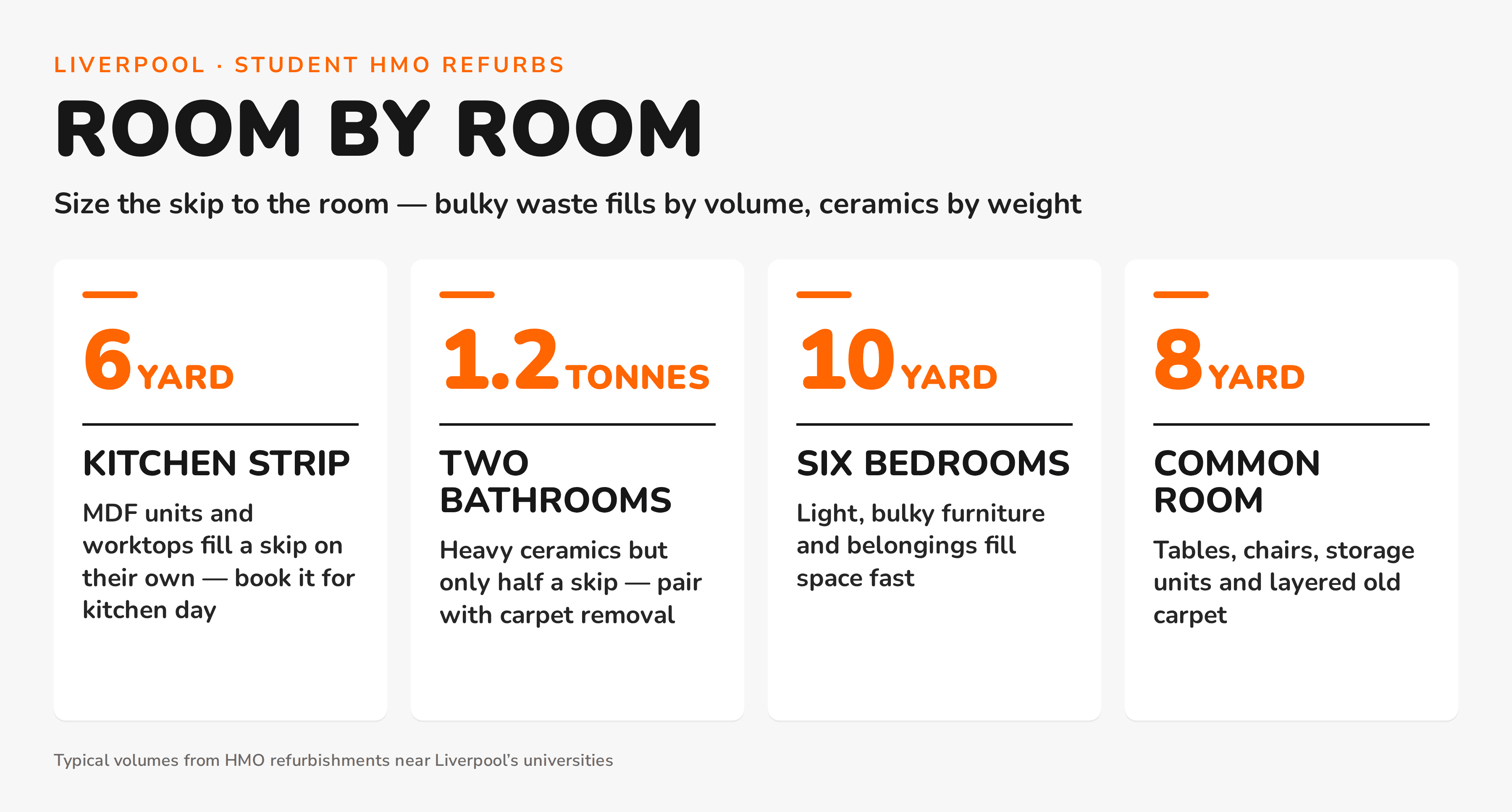
That Aigburth Road kitchen filled a 6-yard skip almost entirely on its own. The cooker was one of those old electric ranges that took three of us to lift, and the previous landlord had installed so many wall units that the room looked like a storage warehouse. We learned to book the skip for kitchen day specifically, rather than trying to mix kitchen waste with lighter materials from other rooms.
Bathroom Renovations and Ceramic Waste
Bathrooms in student houses work harder than anywhere else, and it shows. I've pulled out shower cubicles where the sealant had gone black, toilet suites with cracks you could fit a finger through, and bathroom furniture that was literally falling apart. The waste tends to be ceramic-heavy, which means it's dense but doesn't take up enormous volume.
Two bathrooms might generate 1.2 tonnes of waste but only fill half a skip. The trick is planning other work around bathroom demolition day, because you'll have spare capacity. I usually schedule bathroom strips for the same day as carpet removal from the bedrooms. It's the opposite problem to kitchens, where volume fills the skip before weight becomes an issue.
One mistake I made on a job near Hope Street was ordering a second skip when the first one looked full after the bathroom strip. The ceramic waste had settled overnight, leaving room for another half-tonne of material. Cost the landlord an extra £187 in skip hire when careful planning would have avoided it entirely.
Student Bedroom Clearances
Student bedrooms accumulate clutter in ways that still surprise me after all these years. The amount of furniture that gets abandoned each summer term is remarkable. I've cleared rooms with wardrobes stuffed full of clothes, desks covered in paperwork, and beds surrounded by everything from textbooks to kitchen equipment.
The landlords I work with typically clear bedrooms before any refurbishment work starts, but the timing affects skip hire decisions. Six bedrooms' worth of furniture and belongings can easily fill a 10-yard skip, though much of it is light. Mattresses are the worst culprits for taking up space without adding much weight.
And then there's the seasonal pattern. July and August bring the biggest bedroom clearances, when tenancies end and new students haven't moved in yet. Book skips early during these months, because every landlord skip hire job in the area follows the same schedule.
Managing Multiple Skips Across Project Phases
The Victorian terraces around the universities weren't designed for skip access, and parking restrictions make positioning crucial. I've seen jobs where trades couldn't work for two days because the skip blocked the only access route, and others where permit delays pushed the whole refurbishment schedule back a week.
Phase the skips around the work, not the calendar. Heavy demolition gets the first skip, lighter clearance work gets the second, and any landscaping or external work gets a third if needed. The HMO refresh skip plan should match the trades schedule, because that's when waste actually gets generated.
One job I remember on Ullet Road had a narrow alley access to the rear garden. We used smaller skips positioned at the back of the property, which meant carrying waste through the house but avoided permit issues and kept the front clear for other trades. The extra labour time cost less than highway permits and multiple repositioning fees.
Common Room and Social Area Waste
Many HMOs have shared lounges or dining areas that collect the most random assortment of furniture and fittings. These rooms often get overlooked in skip planning because they're not bedrooms or kitchens, but they can generate significant waste during refurbishments.
I cleared one common room on Kensington that contained:
Two three-piece suites in various stages of collapse
A dining table and eight chairs (mismatched, naturally)
Three different carpet layers, because previous landlords had simply laid new over old
Entertainment unit with an old CRT television still inside
Various lamps, coffee tables, and storage units accumulated over years The volume surprised me. What looked like a straightforward clearance filled most of a 8-yard skip, and that was after we'd separated out the electronic waste for proper disposal elsewhere.
Coordinating with Academic Calendar Pressures
Student house refurbishments happen in narrow windows between tenancies, usually during summer months when universities are quieter. The pressure to complete work quickly affects every decision, including skip hire scheduling. I've watched landlords pay premium rates for next-day skip delivery rather than wait for standard scheduling, because every day matters when September approaches.
The busiest period runs from mid-June through August, when most tenancy agreements end and new ones begin. Skip hire companies know this, and availability gets tighter as the season progresses. Some landlords I work with book their skips in May for July delivery, treating it like booking holiday accommodation early.
Weather affects the timeline more than people expect. A wet July can push external work into August, which means skip hire schedules shift and availability becomes even tighter. Plan for delays, because they happen more often than smooth running in this business.
Cost Planning for Multi-Room Projects
The financial side of skip hire Liverpool projects around universities involves more variables than straightforward domestic work. Permit costs, positioning fees, and the premium rates during peak season all add up quickly. I keep detailed records of every job, and the numbers vary more than most landlords expect when they're budgeting refurbishments.
One five-bedroom house near the Metropolitan Cathedral cost £412 in total skip hire across three separate deliveries. Another similar property on Smithdown Road, completed the following month, came to £289 using a different approach with two larger skips. The difference came down to timing, positioning, and how well we coordinated the waste generation with collection schedules.
Highway permits around the universities cost £35 per week in this area, but some streets require longer permits because of restricted access times. Factor in positioning fees if the skip company needs to use mechanical handling equipment, and waste disposal charges that vary depending on the mix of materials you're throwing away.
The approach that works for planning skips for a multi-flat renovation applies here too. Separate bulky light waste from dense heavy materials, and plan skip sizes accordingly. Don't fill a 10-yard skip with bathroom ceramics when a 6-yard would handle the weight and save money.
Working with Local Skip Hire Companies
Liverpool has several skip hire companies that understand the university area challenges, and choosing the right one makes a significant difference to project flow. Some companies specialise in restricted access situations, others offer better rates for repeat customers, and a few provide same-day service when schedules go wrong.
I've used easyskip.uk on jobs where standard access wasn't possible and found their approach to positioning practical for tight spaces. The key is establishing relationships with companies that understand HMO work patterns, because student house refurbishments have different rhythms from other commercial projects.
Local knowledge matters more than price lists suggest. Skip companies that regularly work around the universities know which streets have parking restrictions, when permit processing takes longer, and how to position skips to avoid blocking access for other trades. That knowledge saves time and reduces the coordination headaches that can derail refurbishment schedules.
Next time you're planning a Liverpool HMO refurbishment skip strategy, walk the property with your skip hire company before booking anything. Measure the access routes, check the permit requirements, and discuss the work schedule so they understand when waste will actually be generated. The twenty minutes spent planning upfront prevents days of delays when the work starts.