


Skip Hire London: How the Direct Vision Standard Quietly Shapes Which Skip Lorries Can Reach Your Street
David Doe• 10.10.2026

The new lorry rules that decide whether your skip arrives on time or gets turned away at the boundary
I was standing outside a Victorian terrace in Finsbury Park on a Tuesday morning last October when the skip lorry pulled up, idled for thirty seconds, then drove straight past. The driver called me from his cab window. "Can't deliver this one, mate. TfL won't let me through the cameras." That was my first proper encounter with London's Direct Vision Standard , though I'd been hearing whispers about it from other site managers for months.
The homeowner had ordered the skip three days earlier for a kitchen renovation that was meant to start that morning. I'd dealt with dozens of skip hire London jobs before, but this was different. The lorry looked normal enough from where I stood, yet it couldn't legally enter the zone where we needed it. We ended up carrying bags of old units and tiles two streets over to where the driver could wait.
What nobody tells you about London skip delivery is how this vision standard now controls which lorries can reach your street. If you're booking 8 yard skip hire London services, the company's fleet determines whether your job happens smoothly or turns into a logistical nightmare. Some operators have upgraded their entire fleet, others are still running older vehicles that get blocked by the cameras.
What the Direct Vision Standard Actually Measures
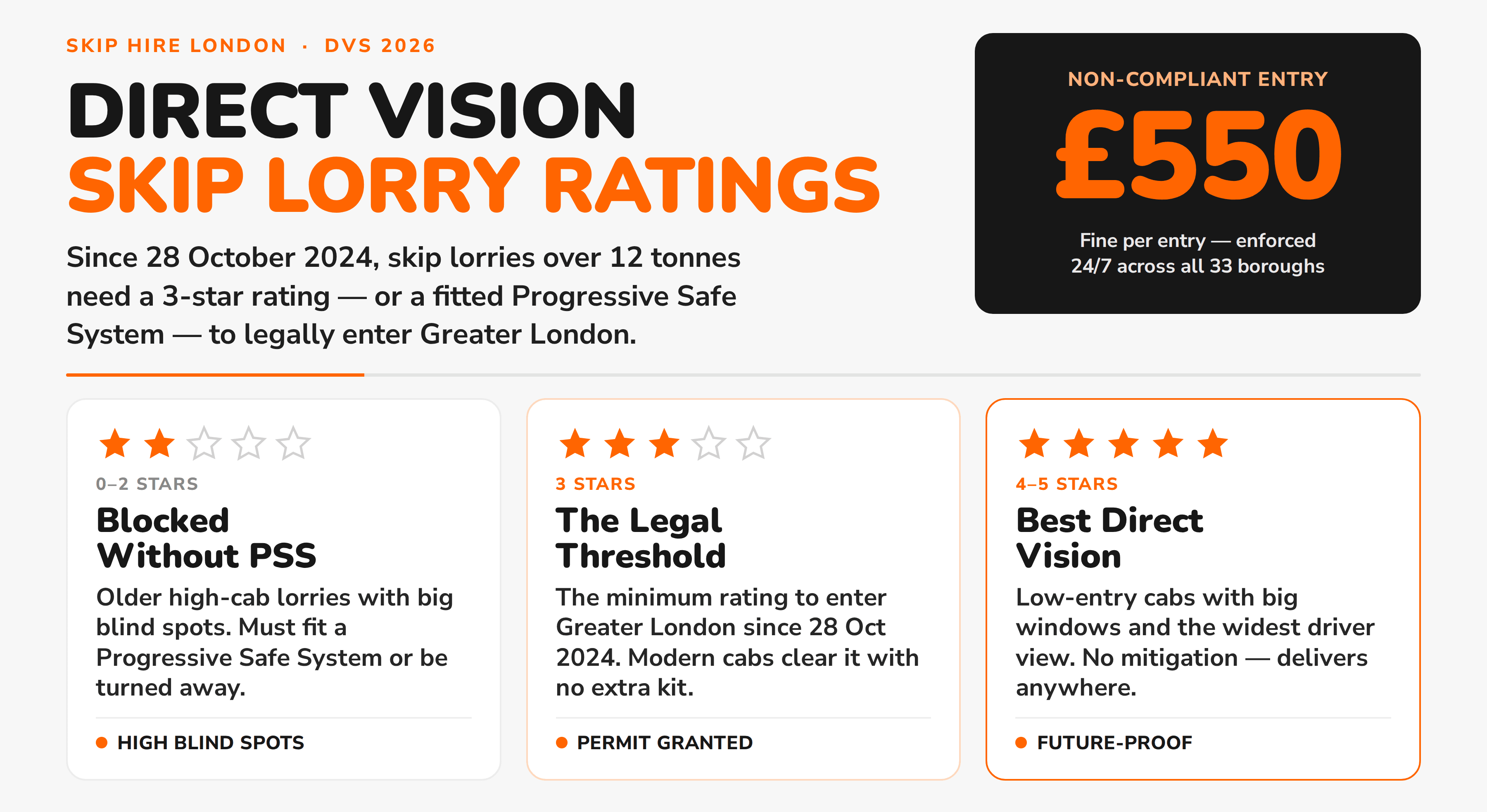
The system rates heavy goods vehicles on how much the driver can see directly through their windows, without mirrors or cameras. Lorries get scored from zero to five stars based on blind spot size. Anything below one star gets banned from most of Greater London during weekday hours.
I've watched this play out dozens of times now. The cameras read number plates automatically and check them against TfL's database. If your skip lorry doesn't meet the standard, it gets flagged before it even reaches your street. The fine is £550 per entry, which most operators won't risk.
Modern skip lorries with low cabs and big windows typically score three or four stars. Older vehicles, especially those with high driver positions and smaller windscreens, often score zero or one. The difference comes down to cab design more than vehicle age, though newer lorries generally perform better.
How Skip Companies Are Adapting Their Fleets
The transition has been messy and expensive. I know one operator in Croydon who spent £340,000 replacing four lorries in 2022 rather than lose access to central London contracts. Another company I've worked with simply stopped serving Zone 1 addresses because the upgrade costs didn't make sense for their business model.
Some firms have taken a mixed approach:
Keep compliant vehicles for London work
Use older lorries for jobs outside the boundary
Partner with other operators who have upgraded fleets
The smart operators saw this coming and started upgrading early. Companies like easyskip.uk invested in compliant vehicles before the rules took full effect, which means they can still deliver anywhere in London without the complications I've seen elsewhere.
Which Areas Get Affected Most
The restrictions cover all 33 London boroughs, but enforcement varies by location and time. Central areas like Westminster, Camden and Islington see the strictest monitoring. I've noticed that residential streets with fewer cameras sometimes still get deliveries from non-compliant vehicles, though this is technically illegal and risky for the operator.
Weekend deliveries face fewer restrictions, but most skip hire companies operate Monday to Friday schedules anyway. If you're planning building work in Zones 1 or 2, assume your skip needs to come from a compliant vehicle unless the company specifically tells you otherwise.
The boundary isn't just the congestion charge area. It extends much further out, catching suburbs that never expected to be affected by lorry vision standards. Places like Bromley, Barnet and Richmond all fall under the same rules.
Real Delivery Problems I've Witnessed
Last March, I was managing a loft conversion in Hackney when our skip delivery got cancelled at 9:47am. The company called to explain their compliant lorry had broken down overnight, and their backup vehicle couldn't enter London legally. We had nowhere to put the old insulation and floorboards we'd already started removing.
The replacement skip arrived three days later. Those three days cost the homeowner £195 in additional labour charges while my team worked around the storage problem. We filled seventeen builder's bags and stacked them in the back garden, then had to move everything again when the skip finally appeared.
This kind of disruption explains why skips arrive late far more often in London than anywhere else I've worked. The vision standard creates a two-tier system where some operators can guarantee delivery times and others simply can't.
What This Means for Your Skip Booking
When you call for London skip delivery, ask whether their vehicles comply with the Direct Vision Standard. Don't assume they do, even if the company has been operating for years. The rules changed faster than many businesses could adapt.
Reliable companies will confirm compliance without you having to explain what the standard means. If they seem uncertain or dodge the question, that tells you something important about their current fleet and capabilities.
Booking timing matters more now than it used to:
Weekend deliveries may use different vehicles Same-day requests often get declined if compliant lorries are already scheduled
Peak renovation season (April through September) sees higher demand for compliant vehicles
Bank holidays sometimes operate under weekend rules, creating more flexibility
Early morning slots before 7am can sometimes avoid the busiest camera monitoring periods
The companies that invested early in fleet upgrades now have a significant advantage in London's market.
The Cost Impact Nobody Talks About
Operators with mixed fleets charge different rates depending on which vehicle they need to send. I've seen quotes vary by £89 for the same 8-yard skip simply because one required a compliant lorry and the other didn't. The customer rarely understands why.
This pricing complexity affects what same-day skip delivery really costs in London compared to other regions. Emergency bookings that need compliant vehicles often carry premium charges because the operator has fewer available lorries to choose from.
Insurance costs have also shifted. Some operators report higher premiums for their compliant vehicles because they carry more electronic systems and cost more to replace. These expenses eventually filter down to customer pricing, though not always transparently.
How the Rules Keep Changing
The current system is just phase one. TfL has announced that two-star vehicles will be required by 2024, with three stars becoming the minimum by 2025. This means some lorries that comply today won't qualify in eighteen months.
I expect another wave of fleet replacements as these deadlines approach. Companies that upgraded to one-star vehicles in 2022 may need to upgrade again soon, which could disrupt delivery capabilities once more.
The enforcement technology keeps improving too. New camera locations appear regularly, and the automatic number plate recognition system covers more routes each year. Some operators who thought they could work around the rules by using quiet side streets have discovered those routes are now monitored.
What This Means for Your Next Project
Check your skip company's fleet compliance before you commit to dates. A reliable operator should be able to tell you exactly which vehicles serve your postcode and whether any delivery restrictions apply.
If you're planning multiple skips over several weeks, confirm that the same service level applies to all your bookings. I've seen projects where the first skip arrived perfectly on schedule, but later deliveries got delayed because different vehicles were available.
Ask what happens if their compliant vehicle breaks down on your delivery day. Companies with backup plans tend to operate larger fleets or have partnerships with other compliant operators. Those without backup options leave you waiting with nowhere to put your waste.