


Skip Hire Birmingham: How to Check a Waste Carrier Licence in Two Minutes
Sarah Baker• 16.11.2026

Why a quick licence check could save you hundreds in fines and cleanup costs
I was standing outside a terraced house in Moseley on a Tuesday morning in March 2019, watching two lads in hi-vis jackets load what looked like half a kitchen into the back of an unmarked van. The homeowner had paid them £180 upfront for what they called a "full house clearance service". By Thursday afternoon, his old units and worktops were scattered across a layby near Sutton Coldfield, and he'd received a £400 fly-tipping fine with his name on it.
That incident taught me something I should have known years earlier. Every legitimate waste carrier in England must hold a valid licence, and checking it takes less time than making a cup of tea. But I'd been lazy about it, assuming that anyone turning up with a van and a quote was probably legitimate.
When you're looking at 8 yard skip hire Birmingham options or any other waste removal service, that two-minute check could be the difference between a smooth job and a legal nightmare. The homeowner in Moseley learned this the expensive way, but you don't have to.
What Makes Someone a Rogue Operator
Rogue skip operators aren't just unlicensed traders knocking on doors. They include registered companies who've let their licences lapse, legitimate businesses working outside their permitted waste types, and operators who subcontract to unlicensed haulers without telling you.
I've seen all three scenarios play out across Birmingham over the past eight years. The most common problem isn't the obvious cowboy with no paperwork. It's the established firm whose waste carrier licence expired six months ago, and they're hoping nobody checks.
The Two-Minute Check That Could Save You Hundreds
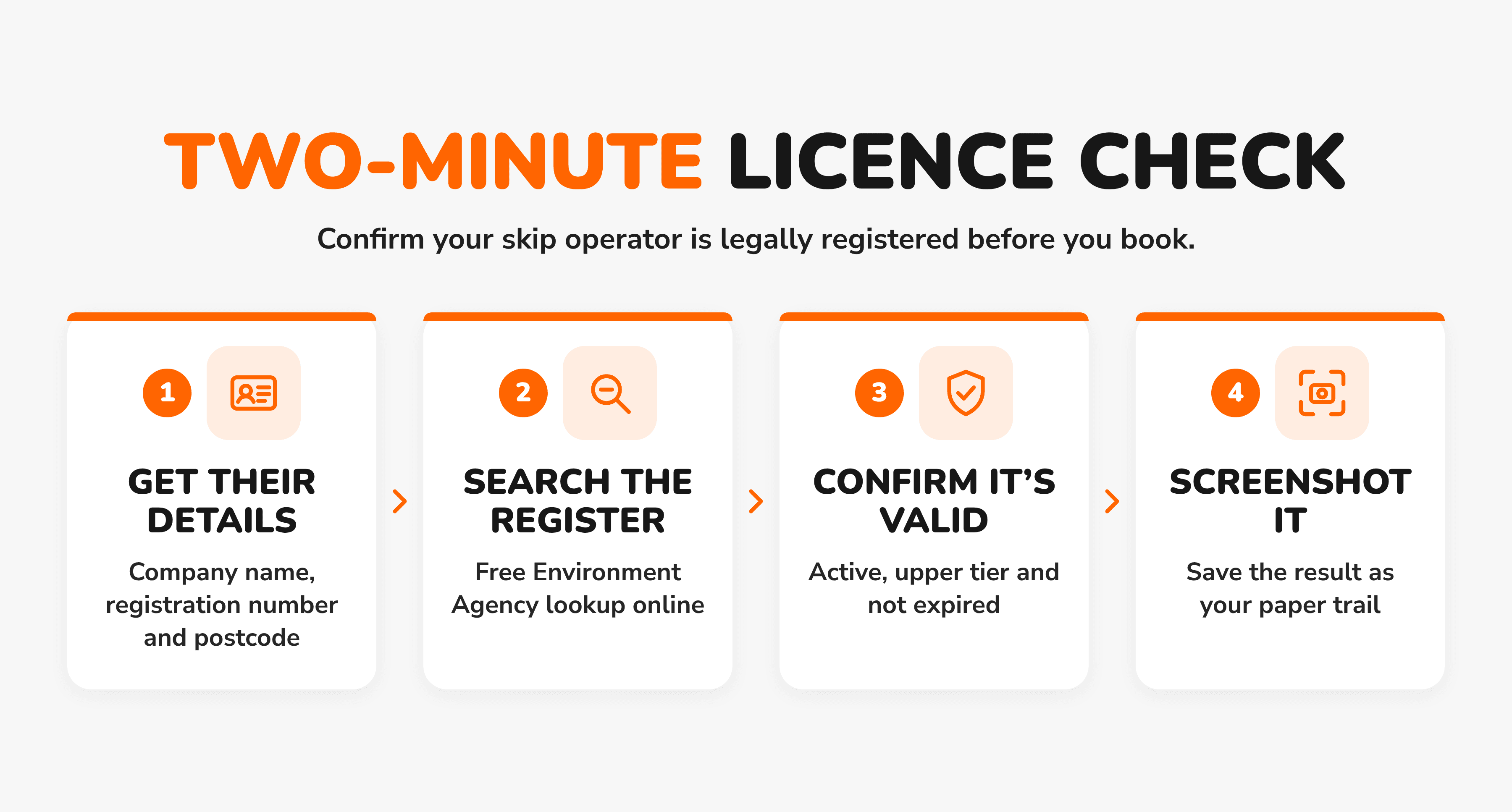
The Environment Agency's public register sits online at environment.data.gov.uk, and it's free to search. You need three pieces of information:
The company name exactly as it appears on their quote
Their registration number (they should give this freely)
The postcode of their registered address
Type any of these into the search box and the system shows you their current status. Active licences display as "Valid", expired ones show "Ceased", and you'll see the exact waste types they're permitted to handle.
I learned to screenshot this page every time after a dispute in Kings Heath where the operator claimed their online status was "just a website error". It wasn't. Their licence had been revoked three months earlier for repeated breaches, but they were still taking bookings and charging full rates.
Red Flags That Should Make You Check Twice
Some warning signs are obvious. Cash-only payments, no registered address, or quotes that seem too good to be true usually mean trouble. But I've also learned to be wary of subtler indicators that suggest corner-cutting.
Operators who can't tell you their waste carrier registration number off the top of their head worry me. Legitimate businesses use this number daily for waste transfer notes and Environment Agency correspondence. If they have to "look it up" or promise to "email it later", they might not have one.
Similarly, be cautious if they can't explain where your waste will go. Licensed carriers maintain detailed records of disposal sites, and they should know whether your particular waste type goes to a transfer station in Aston or a recycling facility in Solihull.
What Happens When Things Go Wrong
The legal responsibility for waste follows it from your property to its final destination. This is called the "duty of care", and it doesn't end when the skip gets collected or the van drives away. If your waste ends up fly-tipped, you're liable regardless of who you paid to remove it.
I've seen homeowners in Erdington receive cleanup bills for £600 because their kitchen renovation waste was dumped in a country lane. The skip hire Birmingham company they'd used had subcontracted the collection to an unlicensed operator, but the original householder was still legally responsible for the mess.
Local authorities pursue these cases aggressively, and they have wide powers to recover costs. The fly-tipping penalty starts at £400 for small amounts, but it escalates quickly if they decide to prosecute through the magistrates' court.
How Birmingham City Council Handles Waste Crimes
Birmingham's environmental enforcement team processes around 200 fly-tipping cases every month, and they've become efficient at tracing waste back to its source. They photograph everything dumped, looking for addresses on envelopes, delivery labels on packaging, or any other identifying information that leads back to the original owner.
The council's approach has toughened significantly since 2021. They used to issue warnings for first-time offences involving small amounts of waste, but now they go straight to fixed penalty notices. The standard fine jumped from £300 to £400, and they're more likely to pursue prosecution for repeat offenders or larger dumping incidents.
You can avoid fly-tipping fines with licensed operators by doing your homework upfront rather than dealing with the consequences later.
The Hidden Costs of Choosing Wrong
Beyond the obvious legal risks, unlicensed operators often create problems that legitimate companies avoid. They rarely carry proper insurance, which means you're exposed if their vehicle damages your property or injures someone during collection.
I remember a case in Harborne where an unlicensed operator's truck reversed through a garden wall during skip collection. The homeowner's insurance refused to cover the £800 repair cost because the incident involved an unregistered commercial vehicle with no valid operator's licence.
There are also practical issues. Unlicensed operators can't obtain highway permits for skips placed on roads, which means your skip might be removed by the council as an obstruction. The cost to retrieve it from the council compound was £150 when I last checked, plus daily storage charges.
What Regulators Miss About Modern Scams
The Environment Agency focuses heavily on major commercial waste crimes, but smaller-scale rogue skip operators often slip through the gaps. Their enforcement resources go toward prosecuting large-scale illegal dumping operations rather than tracking down individual traders working without licences.
This creates space for sophisticated scams that regulators struggle to catch. I've seen operators who maintain valid licences but operate under multiple trading names, some licensed and some not. They quote through the unlicensed entities to undercut legitimate competitors, then transfer the work to their licensed operation if anyone asks awkward questions.
These skip hire scams regulators miss are becoming more common as enforcement pressure increases on obvious unlicensed trading.
Simple Steps to Protect Yourself
Check the licence before you book, not after the work starts. Save the registration details and take that screenshot of the Environment Agency database showing their current status. This creates a paper trail that protects you if problems emerge later.
Ask for their waste transfer note template, which shows where different waste types go and proves they understand their legal obligations. Legitimate operators like easyskip.uk provide this information routinely because they know it builds customer confidence.
Get quotes from at least two licensed operators before making your decision. Prices vary for legitimate reasons (different disposal routes, varying service levels, or seasonal demand), but quotes that are dramatically cheaper than the market rate deserve extra scrutiny.
Most importantly, trust your instincts. If something feels wrong during the initial conversation, whether that's evasive answers about licensing or pressure to pay upfront in cash, keep looking. The waste carrier licence check only works if you're prepared to walk away from operators who can't pass it.