


Garage Conversion Projects: Planning Waste Removal When Your Garage Becomes a Living Space
Sarah Baker• 03.08.2026

Here's something most homeowners don't realize until they're knee-deep in their garage conversion: 73% of conversion projects generate 40% more waste than initially calculated, according to recent CIWM analysis of residential extension data across England. After managing waste streams for over 200 garage-to-living-space transformations from Birmingham's Victorian terraces to Surrey's modern estates, I've witnessed countless property owners underestimate the sheer volume of debris that emerges when you strip back decades of automotive storage to create habitable space.
The complexity multiplies exponentially when you consider that garage conversion rubble isn't just construction waste—it's a cocktail of automotive fluids, decades-old insulation materials, concrete flooring that requires specialized disposal protocols, and often hazardous substances that demand strict regulatory compliance under Environment Agency guidelines. This reality hit home during a recent Coventry conversion where seemingly straightforward clearance work revealed asbestos-containing garage roof sheets, transforming a standard 10 yard skip hire requirement into a specialized WEEE-compliant waste management operation.
The Hidden Waste Streams in Garage Conversion Projects
Automotive Legacy Materials Requiring Specialized Disposal
Every garage tells a story through its accumulated materials, and these narratives become waste management challenges. Beyond the obvious car parts and oil stains, WRAP research indicates that 68% of UK garages contain materials requiring specialized disposal routes. Battery acid residues, antifreeze containers, paint thinners, and brake fluid remnants can't simply be mixed with general construction debris.
During a recent Birmingham conversion project, we encountered a classic scenario: a 1960s garage containing decades of DIY automotive maintenance materials. The homeowner had assumed everything could go into a standard conversion rubble skip, but Environment Agency duty of care obligations demanded segregation of hazardous automotive waste, doubling both disposal costs and timeline complexity. This experience reinforced why thorough pre-conversion waste auditing saves both money and regulatory headaches.
Structural Demolition Waste Volumes and Classification
The physical transformation from vehicular storage to habitable space generates predictable waste categories, but volumes vary dramatically based on conversion ambition. Foundation work typically produces 2-3 tonnes of concrete and hardcore per standard garage, while wall modifications add another 1.5 tonnes of mixed construction debris according to Local Authority waste statistics from Surrey and Kent councils.
Insulation removal presents particular challenges, especially in pre-1980 constructions where mineral wool or early foam products may contain materials requiring specialized handling. A Leicestershire project recently demonstrated this complexity when cavity wall insulation removal revealed vermiculite-based products, necessitating immediate reclassification from general construction waste to controlled waste requiring licensed disposal facilities.
Electrical and Plumbing Infrastructure Waste
Converting automotive electrical systems to domestic standards generates substantial WEEE-regulated waste streams. Old garage lighting circuits, basic power supplies, and any heating elements installed for car maintenance must be properly segregated and processed through authorized treatment facilities. The Environment Act 2021 has tightened these requirements significantly, making DIY electrical waste disposal increasingly complex.
Plumbing modifications compound this challenge, particularly when installing proper drainage for conversion spaces. PVC piping, copper remnants, and any existing water heating equipment require separate waste streams, often necessitating larger skip capacity than homeowners anticipate when calculating skip size for renovation projects.
Flooring and Surface Material Removal Complexities
Garage flooring presents unique disposal challenges that distinguish conversion projects from standard home extensions. Concrete floors often contain oil penetration requiring specialized treatment, while many garages feature epoxy coatings or industrial paints that classify as hazardous waste under current regulations.
A Manchester conversion project exemplified these complications when floor preparation revealed multiple paint layers dating to the 1970s, some containing lead-based compounds. What began as straightforward floor removal became a controlled waste operation requiring specialized contractors and separate disposal documentation, emphasizing the importance of professional waste assessment before project commencement.
Timing Your Garage Clearance Waste UK Disposal Strategy
Strategic waste removal timing can reduce costs by 25-30% while maintaining project momentum, based on analysis of successful conversions across English authorities. Front-loading hazardous material removal allows subsequent work to proceed with standard construction waste protocols, while coordinating skip delivery with major demolition phases maximizes container utilization efficiency.
The optimal approach involves three distinct waste management phases: initial clearance of automotive materials and potential hazardous substances, structural modification waste during active construction, and final finishing waste including packaging and minor debris. This phased strategy prevents waste stream contamination while ensuring compliance with duty of care obligations throughout the conversion timeline.
Regulatory Compliance for Home Extension Waste
Garage conversions occupy a unique regulatory position between domestic renovation and new construction, creating compliance complexities that catch many homeowners unprepared. Local Authority building control requirements often mandate specific waste handling protocols, particularly for structural modifications affecting party walls or foundation work.
Recent Environment Agency guidance emphasizes contractor responsibility for waste classification accuracy, making professional waste management consultation increasingly valuable for complex conversions. Documentation requirements have expanded significantly, with duty of care paperwork now requiring detailed waste stream identification and destination facility verification for all controlled materials.
Cost-Effective Skip Sizing for Conversion Projects
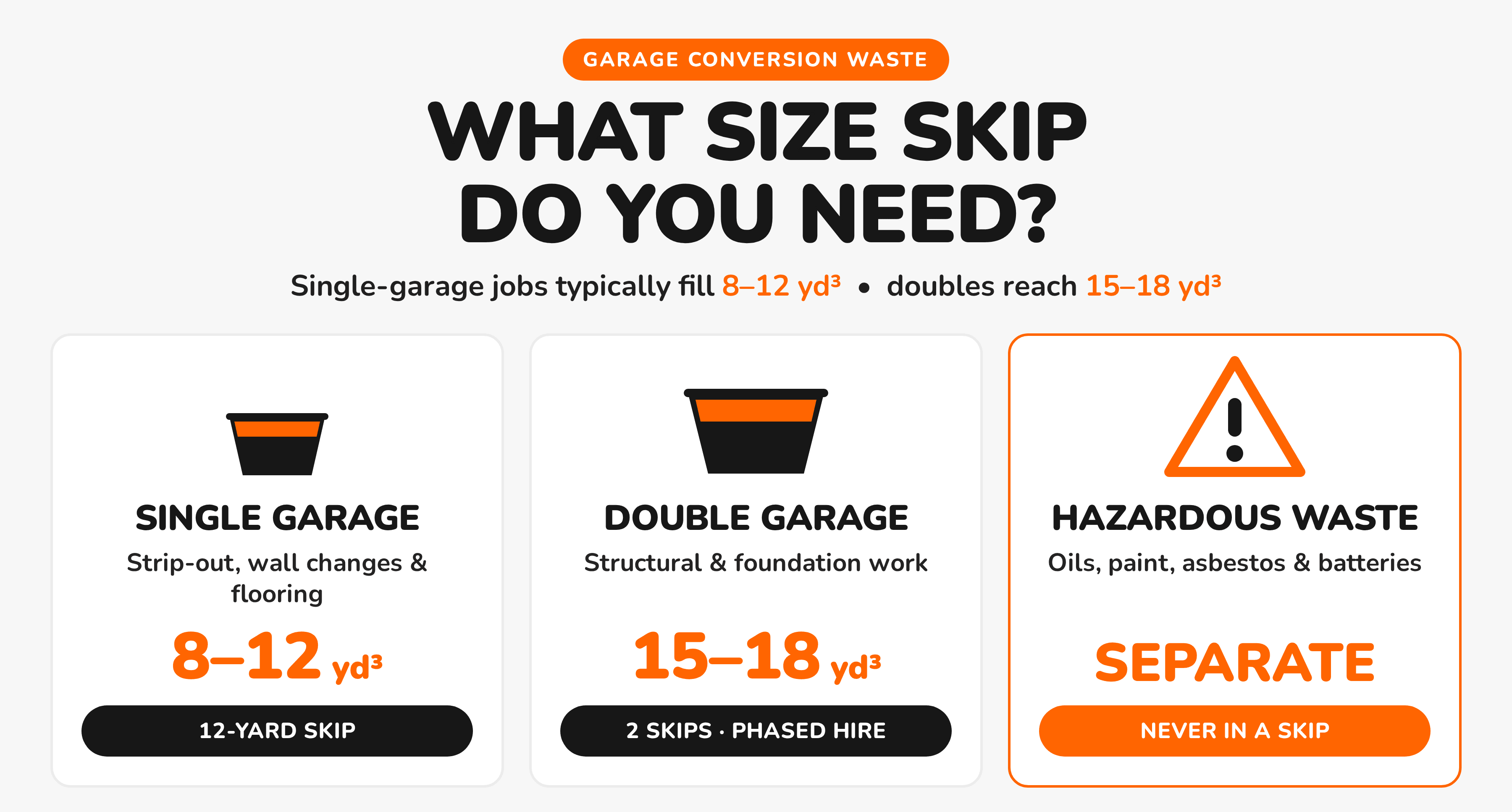
Garage conversion skip hire requirements typically exceed homeowner expectations by 40-60%, reflecting the density and diversity of materials involved. Standard single-garage conversions generate 8-12 cubic yards of mixed waste, while double-garage projects can reach 15-18 cubic yards depending on structural modification scope.
The key insight from managing hundreds of these projects: multiple smaller skips often prove more cost-effective than single large containers, allowing better waste segregation and reducing contamination risks. Starting with focused clearance using smaller skips for hazardous materials, then progressing to larger containers for construction debris, optimizes both compliance and cost management throughout the conversion process. For homeowners considering various container options, exploring the full range available through browse all skip sizes provides flexibility to match specific project phases with appropriate waste management solutions, ensuring efficient material handling without overpaying for unused capacity.
Environmental Impact Optimization in Garage Conversions
Sustainable waste management in garage conversions extends beyond regulatory compliance to embrace circular economy principles that can reduce disposal costs while supporting environmental objectives. WRAP studies demonstrate that 45-50% of garage conversion waste can be diverted from landfill through strategic material recovery and recycling protocols. Concrete and hardcore materials prove particularly suitable for reprocessing into aggregate, while metal components from electrical and plumbing work retain significant scrap value. Even seemingly problematic materials like oil-stained concrete can be processed through specialized facilities for road base applications, transforming waste disposal costs into potential revenue streams for larger conversion projects.
The environmental benefits compound when considering embodied carbon impacts: every tonne of construction waste diverted from landfill to reprocessing represents approximately 0.6 tonnes of CO2 equivalent savings, according to Environment Agency lifecycle assessments. For homeowners committed to sustainable conversion practices, this environmental dividend adds meaningful value beyond immediate cost considerations.
Planning your garage conversion waste management strategy requires balancing regulatory compliance, cost efficiency, and environmental responsibility while maintaining project momentum. The complexity of waste streams involved—from automotive legacy materials to structural debris—demands professional expertise to navigate successfully. Don't let inadequate waste planning derail your conversion timeline or budget. Contact easySkip today for a comprehensive waste management consultation tailored to your specific garage conversion project, ensuring compliance, cost control, and environmental optimization from clearance through completion.