


12 Yard Skip Hire Liverpool: When Garden Overhauls Need Serious Volume
Sarah Baker• 12.10.2026

Why the biggest residential skip becomes essential for landscaping projects that generate mountains of bulky waste
I'd been fitting kitchens and bathrooms around Wavertree for 11 years before I took on my first proper garden job. Tuesday morning in March 2019, standing in a back garden that looked like a building site, I realised everything I knew about waste volumes was wrong. The homeowner wanted their entire 47-foot garden stripped back to bare earth, ready for artificial grass and raised beds. What looked manageable from the kitchen window turned into 3.2 tonnes of soil, turf, shrubs and rotting decking.
That's when I learned the difference between weight and bulk. A bathroom refit generates heavy debris that packs tight, concrete and tiles and old sanitaryware that fills a skip efficiently. Garden clearances work the opposite way round.
The 12 yard skip hire Liverpool became my go-to solution for these jobs, though it took three failed attempts and one very awkward conversation with a skip company to figure that out. Volume matters more than tonnage when you're shifting bushes, lawn turf and soil mixed with roots.
The Weight Versus Volume Problem
Garden waste fills space faster than anything else I've handled. A standard 6-yard skip looks enormous when it arrives, but start loading it with hedge trimmings and you'll hit capacity while the thing's barely half the weight limit. I watched one homeowner in Allerton spend £340 on three separate 6-yard skips for a job that would've fitted comfortably in one 12-yard.
Soil behaves differently again. Wet clay from Liverpool's heavier ground can max out a skip's weight allowance at just 4 tonnes, leaving you with wasted volume. But mix that soil with organic matter, old turf and pruned branches, and suddenly you need every cubic foot of space the skip offers.
What Actually Goes Into a Garden Clearance Skip
The variety surprised me most. One job in Woolton filled a 12-yard skip with materials I'd never considered:
Excavated topsoil mixed with builder's sand from a previous patio job
Rolled turf that had been cut into strips, each piece holding onto clumps of earth and root systems
Mature shrubs with root balls the size of washing machines
Rotting wooden planters that came apart as soon as we touched them
Bags of old compost that had turned into a solid, smelly mass over several winters
The planning rules around garden clearance can catch you off guard too. Not everything from a garden renovation can go in a standard mixed waste skip, and getting it wrong costs time and money. I learned this the hard way when a skip company refused to collect a load that contained paint tins from an old garden shed. The detailed guidance on garden clearance: what goes in the skip would've saved me that £185 re-delivery charge and an extra day on site.
Liverpool's Garden Waste Challenges
Liverpool's older housing stock creates specific problems. Victorian terraces in areas like Mossley Hill often have gardens that haven't been touched for decades. I've found everything from Anderson shelter remains to 1970s crazy paving buried under what looked like a simple lawn.
The clay soil common around Merseyside holds water, making everything heavier during wet months. A 12 yard skip hire job I priced for dry conditions in September turned into a nightmare when October rain soaked the excavated material. The skip company had to bring lifting equipment because the lorry couldn't handle the extra weight.
When Size Becomes Essential
Certain projects demand the full 12-yard capacity from day one. Artificial grass installation generates massive volumes of waste because you're essentially removing the entire existing garden surface. The artificial grass soil and turf cost trap explains why this waste management piece often gets underestimated in project budgets.
I've also seen full garden redesigns where the homeowner wants to lower the ground level by 8 or 9 inches. That means shifting cubic yards of soil along with everything growing in it. One job in Childwall required removing 127 bags of excavated material plus the existing lawn, mature hedge and three established fruit trees.
The Practical Loading Strategy
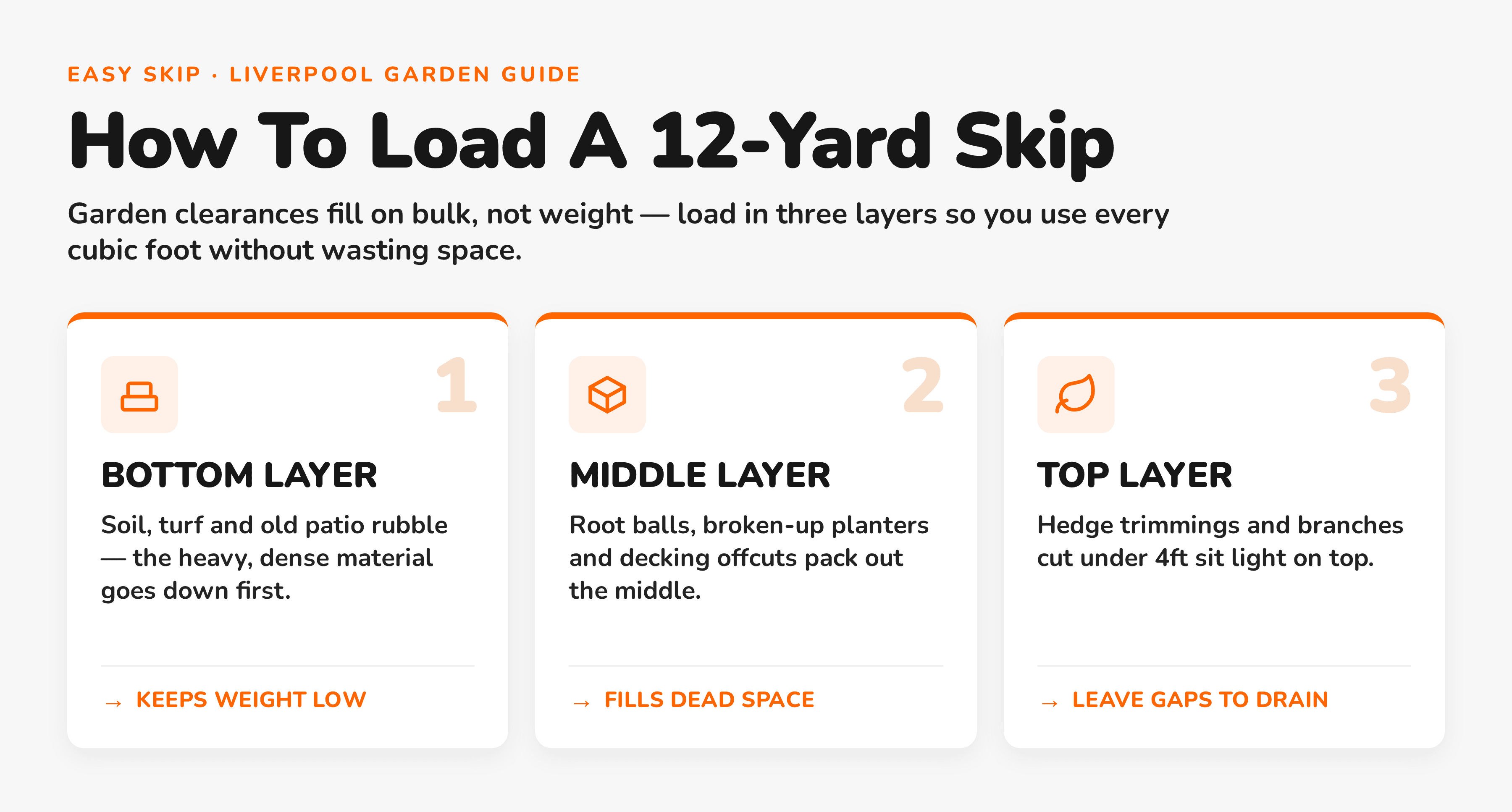
Loading a 12-yard skip efficiently takes planning. Heavy materials go in first, soil and rubble at the bottom where the skip's structure can handle the weight. Then layer the bulky stuff on top.
But don't pack it like Tetris. Liverpool garden landscaping waste often includes materials that continue decomposing in the skip, and organic matter compressed too tightly can create drainage problems. I leave gaps between layers, particularly around green waste that might still be damp.
Tree branches and hedge trimmings need breaking down to manageable lengths. Anything over 4 feet becomes awkward to load and wastes space. I keep a small chainsaw for this, though many homeowners don't realize the extra work involved until they're standing next to a skip with 12-foot branches in their hands.
Timing and Permits
A 12-yard skip sits on the road for longer than smaller ones, partly because these jobs take more time to complete and partly because you're often waiting for the skip to reach capacity. Liverpool City Council charges £35.60 for a standard highway permit, valid for 14 days. I always apply for the full period even when the job looks straightforward.
The permit becomes crucial in areas with parking pressure. Streets around Aigburth and Sefton Park fill up fast, and residents get frustrated when a large skip blocks spaces for more than a few days. I've learned to warn neighbours beforehand, especially during school term when parents need those parking spots for the morning drop-off.
Green Waste Versus Mixed Waste
Some garden clearances qualify for green waste skip hire, which costs less because the materials get composted rather than sent to general landfill. But the rules are stricter than most people expect. No soil, no stones, no treated timber, no plant pots.
Pure green waste skips work well for maintenance jobs where you're just clearing overgrown areas. But full garden overhauls almost always generate mixed materials. I've found it's usually more practical to book a standard mixed waste skip rather than trying to separate everything on site.
The composting route appeals to environmentally minded customers, and I respect that. But when you're standing in a garden with soil, roots, concrete edging, old fence panels and green waste all mixed together, separation becomes a major task that adds days to the job timeline.
Cost Realities and Planning
A 12-yard skip hire typically runs between £280 and £340 around Liverpool, depending on the hire period and exactly what you're putting in it. That sounds expensive until you compare it with the alternative of multiple smaller skips or several trips to the household waste recycling centre with a hired van.
I price garden clearance jobs differently now, factoring in the skip size from the initial quote rather than treating waste disposal as an afterthought. Customers appreciate the transparency, and I avoid those awkward conversations about additional costs halfway through the work.
The weight allowance on a 12-yard skip usually covers garden waste comfortably, but I always check with the skip company about soil quantities. Some operators get nervous about heavy clay loads and prefer advance warning. Companies like easyskip.uk have been reliable for the garden jobs I've handled, particularly around permit coordination and collection timing.
Next time you walk past a large garden renovation in your area, look at the skip size they've chosen. Count how many wheelbarrow loads of material are still waiting to go in. The gap between what homeowners expect and what the job actually generates never stops surprising me.